French Bulldog Apartment Air Quality: A Practical Guide
Quick answer
Good indoor air quality starts with removing avoidable irritants and keeping air moving, not with a particular purifier brand or a single humidity number. Avoid smoke and strong fragrances, maintain the heating and cooling system according to its manufacturer, ventilate when outdoor air quality allows, and watch how your own Frenchie responds.
When wildfire smoke or a poor-air alert affects your area, change the plan: keep windows and doors closed, use recirculated and filtered air if your system allows it, restrict outdoor time to brief bathroom breaks, and replace outdoor exercise with calm indoor enrichment. Check your local official air-quality alert rather than judging safety by smell or visibility alone.
An air purifier can reduce some airborne particles in a room, but it cannot diagnose or correct a narrowed airway, infection, allergy, or other medical problem. No device makes smoke, heat, or poor ventilation safe.
Poor outdoor air: a practical action plan
French Bulldogs are brachycephalic, or short-muzzled. Cornell University College of Veterinary Medicine lists brachycephalic dogs among those more susceptible to poor air quality. Puppies, seniors, and dogs with heart or lung disease also need extra caution.
Use this plan when an official alert says air is unhealthy, wildfire smoke is affecting your area, or local authorities advise people to stay indoors:
- Check the current local alert. In the United States, use AirNow or your state or local air-quality agency; elsewhere, use the official service for your location. Conditions can change during the day, so recheck before every nonessential outing.
- Keep outdoor trips brief. Go out only for bathroom needs, use a leash and well-fitted harness, and return indoors promptly. Skip running, hiking, fetch, and long walks until official conditions improve. Do not put a human respirator or mask on your dog.
- Close windows and exterior doors. If your HVAC system has a fresh-air intake, follow its instructions for closing the intake or using recirculation mode. Keep the apartment cool; if closing the apartment makes it dangerously hot, go to a cooler, cleaner-air location rather than accepting heat risk.
- Filter the room your dog uses most. Run a properly sized, non-ozone-producing portable air cleaner if available, or use the highest-efficiency HVAC filter the system can safely accommodate. A landlord or HVAC professional can confirm what a shared or built-in system supports. Check filters more often during heavy smoke.
- Stop adding particles indoors. Avoid smoking or vaping, candles, incense, aerosol sprays, frying or broiling, and vacuuming without a HEPA-filtered vacuum. Damp-dust or mop settled material instead of dry sweeping it into the air.
- Move activity indoors. Use short training sessions, sniffing games, or a food puzzle that fits your dog’s diet. Our indoor exercise and enrichment guide has low-space ideas, but stop any activity that causes hard breathing.
- Watch the dog, not only the air-quality number. Red or watery eyes, coughing, gagging, a faster breathing rate while resting, or difficulty breathing can follow smoke exposure. Contact your veterinarian if you are concerned about exposure or any new symptom.
What to do as conditions change
| Situation | Outdoor plan | Apartment plan | Health response |
|---|---|---|---|
| No alert and air appears normal | Follow the dog’s usual comfortable routine | Ventilate normally if temperature and building safety allow | Note any unexplained cough or breathing change |
| Poor-air alert or smoke affects the area | Bathroom breaks only; no strenuous activity | Close windows and doors, recirculate and filter air, reduce indoor particle sources | Monitor eyes, cough, gagging, resting breathing, energy, and appetite |
| Air improves temporarily | Resume activity gradually; do not compensate with one hard walk | Air out the apartment only when official outdoor conditions improve | Keep observing a dog that was exposed or symptomatic |
| Coughing, gagging, red or watery eyes, or faster breathing at rest | End the outing and move indoors | Use the cleanest, coolest available room | Contact your veterinarian promptly for individual advice |
| Labored or open-mouth breathing at rest, blue or gray gums, collapse, confusion, or severe weakness | Do not continue the walk | Move away from smoke and heat without delaying care | Seek emergency veterinary care immediately |
An air-quality alert is not an evacuation order. If fire or officials require evacuation, leave promptly with your dog and follow local emergency instructions. Filtration cannot make an apartment safe from a nearby fire.
Reduce the biggest everyday indoor irritants
Keep your Frenchie away from cigarette, cannabis, fireplace, candle, incense, and cooking smoke. Avoid spraying aerosols, perfume, essential oils, harsh cleaners, and fragranced products near the dog. Open windows only when outdoor air quality, temperature, and building safety make that sensible.
Clean dust from surfaces and wash bedding regularly. Vacuuming can temporarily move particles into the air, so allow the room to settle before bringing your dog back. Store cleaners, paints, and renovation materials in a closed area.
If a smell bothers you, do not cover it with fragrance. Find and remove the source when it is safe to do so. Persistent dampness, visible mold, combustion odors, or building-wide ventilation problems should be reported to the property manager; extensive contamination may require qualified inspection rather than do-it-yourself treatment.
Improve ventilation sensibly
Use the apartment’s ventilation or HVAC system as intended. Replace filters on the schedule recommended for that system, choose the correct size, and keep return vents clear. A portable fan can circulate air, but it should not replace ventilation or blow directly into the dog’s face.
Ventilation advice changes with outdoor conditions. Bringing in outside air may help with ordinary indoor odors or cleaning fumes when the outdoor air is good. During wildfire smoke, however, the U.S. Environmental Protection Agency advises minimizing smoke entry, closing windows and doors, and using recirculated and filtered air. Once outdoor conditions improve, ventilate the apartment again.
If you are renovating, painting, or using strong adhesives, keep your dog in a separate, well-ventilated area and follow the product’s safety instructions. When in doubt, ask your veterinarian or the product manufacturer how long the space should remain unused.
If you use an air purifier
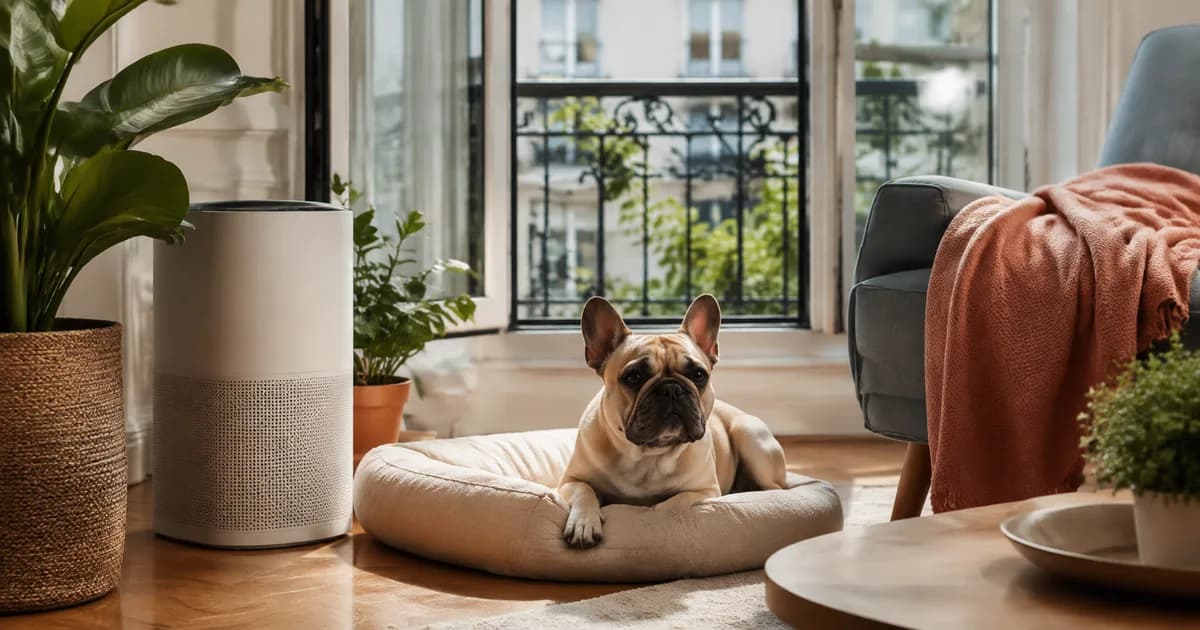
Choose a unit sized for the room and follow the manufacturer’s filter and placement instructions. A particle filter may help with dust or fine smoke particles; an activated-carbon stage may help with some gases or odors. These descriptions are not promises of medical benefit, and a purifier does not remove every pollutant.
The EPA recommends selecting a portable unit with a clean air delivery rate, or CADR, appropriate for the room and avoiding units that produce ozone. Place the unit where air can circulate, keep cords secure, and prevent the dog from chewing the cable or filter. Run and replace filters as directed; a clogged filter cannot perform as intended.
Stop using any device that causes noise-related distress, overheating, or a new respiratory reaction. Do not use ozone generators around pets.
Humidity and temperature
Very dry or damp air can be uncomfortable, but there is no one indoor setting that suits every dog or building. Use a clean hygrometer if you need to understand the room, fix leaks or condensation, and clean humidifiers exactly as directed. A dirty humidifier can add unwanted material to the air.
Temperature is equally important. Keep a cool resting area available and avoid direct sun or heat sources. Short-faced dogs may have more difficulty cooling themselves when hot, stressed, or exercising. Use your dog’s breathing and behavior as signals, not a universal thermostat rule. See our French Bulldog summer safety guide for heat precautions and emergency cooling steps.
Know what is normal for your dog
A short video and a simple note about when noisy breathing, coughing, sneezing, or exercise intolerance occurs can help a veterinarian. You can also count resting breaths for a full minute while your dog is asleep or calmly resting and record the result for comparison; ask your veterinarian what range is appropriate for your dog.
Do not label a new symptom as “just the breed.” Seek veterinary advice for a persistent or changing breathing pattern, repeated coughing, nasal discharge, reduced tolerance for normal activity, or sleep disruption. Dogs with diagnosed brachycephalic obstructive airway syndrome, heart disease, lung disease, or a previous smoke reaction may need a veterinarian-made plan before smoke season.
Heavy or labored breathing at rest, blue or gray gums, collapse, severe weakness, confusion, or an inability to settle is an emergency. Move the dog away from heat or smoke and contact an emergency veterinary service immediately. Do not delay transport to troubleshoot a purifier or wait for the air-quality reading to change.
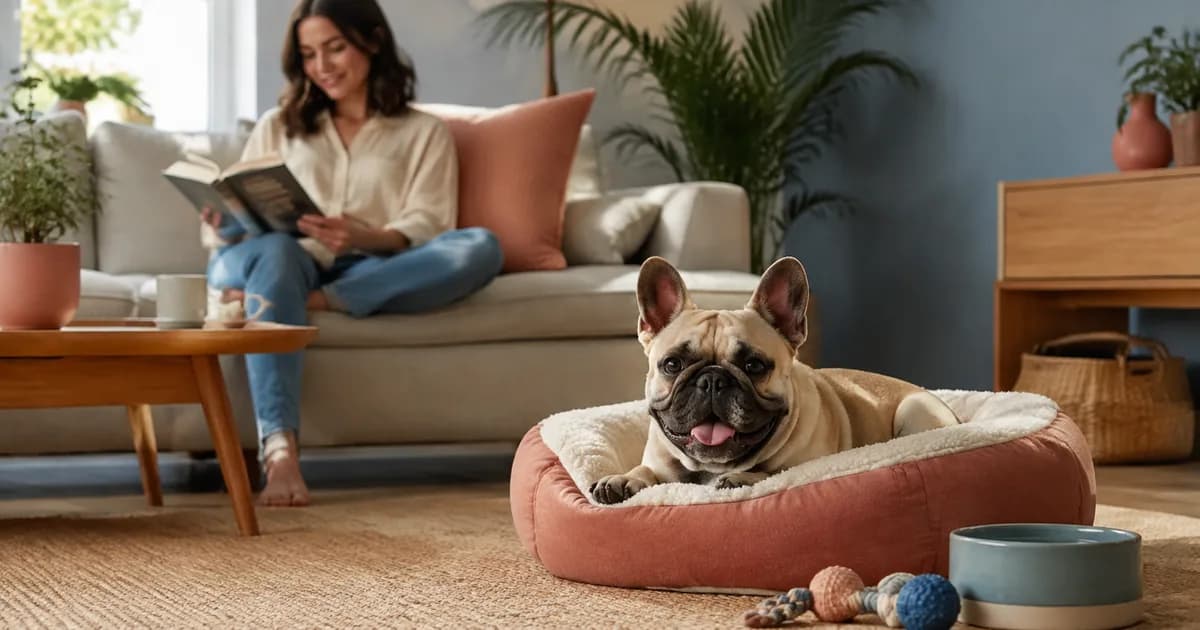
A simple room plan
- Keep the resting area away from the kitchen, smoking areas, direct sun, and strong airflow.
- Put water in an easy-to-reach place on a stable, washable surface.
- Route purifier and lamp cords behind furniture or use safe cord protection.
- Keep windows and balconies secured while still allowing appropriate ventilation when outdoor air is good.
- Store sprays and cleaners outside the dog’s access.
- Keep a clear path to a cooler room or the exit.
- During smoke events, concentrate filtration in the room where your dog and household spend the most time.
What an air-quality setup cannot do
It cannot confirm an allergy, treat brachycephalic airway disease, replace prescribed treatment, or make a hot car or poorly ventilated room safe. It also cannot guarantee clean air during severe smoke or a nearby fire. If the environment has improved but your Frenchie still struggles to breathe, the next step is veterinary assessment.
Bottom line
For everyday air quality, start at the source: no smoke, careful use of fragrances and cleaners, sensible ventilation, maintained equipment, and a comfortable temperature. During a poor-air alert, switch to a closed-window, filtered-air plan, limit outdoor time to bathroom breaks, and use calm indoor enrichment. Because French Bulldogs are more vulnerable to respiratory stress, treat new coughing, gagging, or altered resting breathing seriously and seek emergency care for breathing distress.
Sources
- Cornell University College of Veterinary Medicine: Dog safety during poor air quality alerts or wildfire smoke
- U.S. Environmental Protection Agency: Wildfires and indoor air quality
- AirNow: Air Quality Index and wildfire information
- Merck Veterinary Manual: Laryngeal disorders in animals
This article is general educational information. It does not diagnose breathing problems or recommend a medical treatment.