Quick answer
There is no single floor plan or minimum square-footage number that makes an apartment suitable for every French Bulldog. A workable home gives your dog a quiet place to rest, a clear route to the exit or toilet area, room for gentle activity, accessible water, and a cooler place away from direct sun.
The most practical layouts separate the rest zone from the noisy entry, keep an open non-slip route between key areas, and place the activity zone where it can be supervised. A studio can work as well as a larger apartment when those relationships are clear and the dog’s exercise, toilet, companionship, and health needs are met.
Four apartment layouts at a glance
These diagrams are examples, not architectural plans. Doors, windows, heating, airflow, neighboring noise, and building rules vary, so adapt the zones to the home and the individual dog.
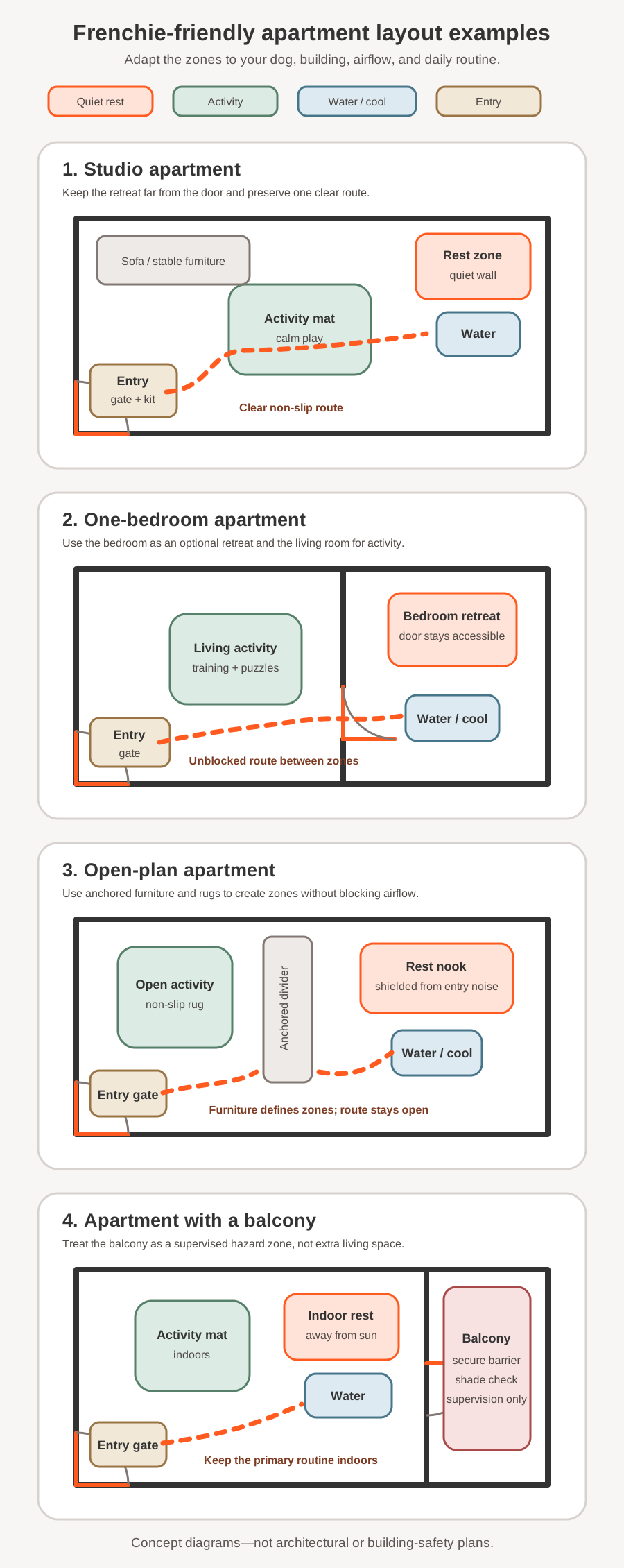
The colored blocks show relationships between zones, not exact room sizes. Keep fire exits, accessible routes, and building-required clearances unobstructed.
| Layout | Best use of space | Main watch-out |
|---|---|---|
| Studio | Quiet bed at the far side, supervised activity in the center, entry supplies beside the door | The bed can end up too close to noise, cooking heat, or foot traffic |
| One bedroom | Bedroom retreat plus a separate living-room activity area | The dog should be able to leave the retreat voluntarily when safe |
| Open plan | Stable furniture and non-slip rugs create boundaries without building walls | Dividers must be anchored and should not obstruct airflow or the main route |
| Balcony apartment | Keep the normal routine indoors and treat the balcony as supervised access only | Rail gaps, climbable furniture, direct sun, and hot surfaces can make balconies dangerous |
1. Create a quiet sleep zone
Place the bed or open crate in a calm part of the home where your Frenchie can rest without being in the middle of foot traffic. A bedroom corner or quiet living-room wall can work. Avoid the front door, television, direct sun, radiators, cooking heat, and the only route through the room.
The RSPCA recommends a comfortable, clean, quiet resting place where a dog can remain undisturbed and leave freely. If you use a crate, introduce it as a voluntary safe space. It should be large enough for the dog to stand, turn, lie down, and stretch comfortably. Do not use it as punishment or as a substitute for companionship and appropriate activity.
Some dogs prefer two resting options: one near the household and another in a quieter area. Watch where your Frenchie chooses to settle before deciding that the visually neatest corner is the best one.
2. Make the toilet route simple
Keep the harness, leash, waste bags, and keys beside the exit without narrowing the walkway. The route from the bed to the door should be easy to follow at night and free from shoes, boxes, loose rugs, or furniture corners.
If the household uses an indoor pad or grass area, keep it in one predictable, ventilated location away from food, water, and the main bed. Clean it promptly and make sure the dog can reach it without crossing a slippery or blocked area.
Young dogs need more frequent opportunities, especially after sleep, food, play, and drinking. A layout cannot replace supervision or a routine. If a previously trained adult begins having accidents, arrange a veterinary check rather than assuming the floor plan is the cause.
3. Define a supervised activity zone
Use a clear area for calm play, scent games, food puzzles, and short training sessions. A non-slip rug or runner can define the zone and provide traction. VCA recommends non-slip surfaces in the places where dogs regularly walk, turn, rise, eat, and drink—particularly when mobility is limited.
Remove loose cords, small objects, unstable furniture, and toys that can be swallowed. You do not need a dedicated dog room: a washable mat beside the sofa can mark the activity area, while a separate bed signals rest.
For low-impact ideas that fit this space, see our French Bulldog indoor-exercise guide.
4. Protect the entry from noise and escapes
The entryway combines door movement, visitors, hallway sounds, and outside smells. Keep the bed outside the door swing and use a securely installed gate or closed interior door during deliveries when direct supervision is difficult. A gate is a management layer, not a substitute for teaching calm door behavior.
If hallway sounds trigger barking, move the main resting area farther from the shared wall or entrance. Soft furnishings and a predictable quiet retreat may help, but persistent fear or distress needs a behavior plan rather than punishment. Our apartment noise guide explains how to identify and manage common triggers.
5. Choose a cooler resting area
French Bulldogs are brachycephalic, and Cornell notes that short-muzzled dogs can have more difficulty cooling through panting. Keep the primary bed out of direct sun and away from heat-producing appliances. Water should remain accessible, and the dog should be able to move between a comfortable bed and a cooler surface.
Do not position a crate or enclosed bed where closing a door, blind, or window could reduce ventilation. A fan or air conditioner may help manage the room, but the setup still needs monitoring during hot or humid weather and power failures.
If outdoor smoke or pollution makes open windows unsafe, use the action plan in our French Bulldog apartment air-quality guide.
Heavy or unusual panting, noisy or difficult breathing, weakness, confusion, collapse, or inability to settle after heat exposure needs urgent veterinary attention. A cooler corner or cooling product is not emergency treatment.
6. Four layouts to adapt
Small studio
Put the quiet rest zone against the wall farthest from the entrance, television, and kitchen heat. Use the center for a washable activity mat so play remains visible. Place water in an accessible shaded location, then preserve a clear route from the bed to the exit.
In a single room, separation comes from distance and routine rather than walls. Avoid filling the perimeter with furniture until the dog has only one narrow path through the home.
One-bedroom apartment
Use the bedroom or a quiet living-room corner as the main retreat, depending on where the dog naturally rests. Keep the living area open for gentle activity and training, and place outdoor supplies beside the exit without creating a trip hazard.
A bedroom retreat works only when the dog can access and leave it safely. Do not repeatedly shut a nervous dog away from the household or use the room as punishment.
Open-plan apartment
Use an anchored sofa, low stable storage unit, or non-slip rugs to suggest separate functions: activity on one side and rest on the quieter side. Keep enough open space around the divider for airflow and an easy route to water and the exit.
Do not use lightweight screens, tall unanchored shelving, or objects that can fall if bumped. The aim is visual organization, not a maze.
Apartment with a balcony
Keep the dog’s normal rest, activity, water, and toilet routine indoors. Treat the balcony as an optional supervised area only after checking rail gaps, climbable furniture, plants, dropped objects, direct sun, floor temperature, and building rules.
Never rely on a screen, decorative net, or the dog’s usual behavior as the only fall barrier. Do not leave a Frenchie outside unattended; balconies can become hot quickly and may expose the dog to noise or poor air quality.
How to choose and adjust the setup
Start with the smallest arrangement that creates clear functions, then observe the dog for one to two weeks.
| What you observe | Practical adjustment |
|---|---|
| The dog avoids the bed | Check heat, drafts, noise, foot traffic, bed texture, and pain before moving it |
| Barking rises near the entrance | Move the retreat farther away and add a door-management barrier |
| The dog slips when turning or standing | Extend non-slip runners across the whole repeated route |
| Water is repeatedly knocked over | Use a stable bowl in a low-traffic spot, without restricting access |
| The dog cannot settle during visitors | Create a voluntary retreat behind a gate or interior door |
| Panting is worse in one room | Check sun, temperature, humidity, ventilation, and seek veterinary advice for abnormal breathing |
One layout should not remain fixed when a dog becomes older, develops mobility problems, starts guarding a location, or shows a new breathing or behavior concern.
Apartment safety checklist
- Secure balconies, windows, and door gaps; never rely on a screen as the only barrier.
- Anchor furniture that could tip and keep toxic plants and cleaning products out of reach.
- Cover or block access to electrical cords and remove small chewable objects.
- Use non-slip paths where your dog regularly turns, rises, eats, drinks, or approaches the door.
- Keep identification, a harness, and a leash close to the exit.
- Keep food and water away from the toilet area.
- Check temperature and airflow instead of assuming every room feels the same.
- Give the dog a quiet retreat away from visitors and household noise.
- Keep emergency exits and human walking routes clear.
For the broader routine—including exercise, alone time, toilet planning, and neighbors—use the complete French Bulldog apartment-living guide.
Bottom line
The best apartment layout is not a particular number of bedrooms. It is a predictable arrangement with a quiet retreat, supervised activity area, accessible water, safe toilet route, entry management, comfortable traction, and temperature control. Use the floor plans as starting points, watch how your Frenchie actually moves and rests, and adjust the home to the dog in front of you.
Sources
- RSPCA: Creating a good home for your dog
- RSPCA: How to crate train a puppy
- VCA Animal Hospitals: Creating a comfortable home for a mobility-compromised dog
- Cornell University College of Veterinary Medicine: Brachycephalic obstructive airway syndrome
- AVMA: Household hazards
This article provides general educational information. The diagrams are planning examples, not architectural, fire-safety, accessibility, or veterinary assessments of a particular home or dog.