Quick answer
A yard is not required for a French Bulldog to have a useful daily routine. Combine comfortable movement with sniffing, play, training, and rest. The right amount depends on age, health, fitness, weather, and what your dog can do without breathing difficulty or pain.
Do not try to replace outdoor time with exhausting indoor workouts. Short-faced dogs may be less tolerant of heat and strenuous exercise, so observe your Frenchie and stop before they become over-tired.
1. Scent games
Scatter a few pieces of the dog’s normal food over a washable mat, hide them in easy locations, or let your Frenchie follow a simple scent trail. Start in one room and make the search harder only when the dog is confident.
Keep small objects, toxic foods, and anything that can be swallowed out of reach. Supervise any new game and count treats as part of the daily diet.
2. Food puzzles
Use a puzzle feeder or food-dispensing toy that your dog can use without biting off pieces. Begin with an easy setting so frustration does not turn the activity into chewing or guarding. Check the toy regularly for damage and follow its cleaning instructions.
Food puzzles are enrichment, not a replacement for veterinary nutrition advice. If your Frenchie eats too quickly, vomits, guards food, or has a condition that affects feeding, ask your veterinarian which format is appropriate.
3. Gentle play
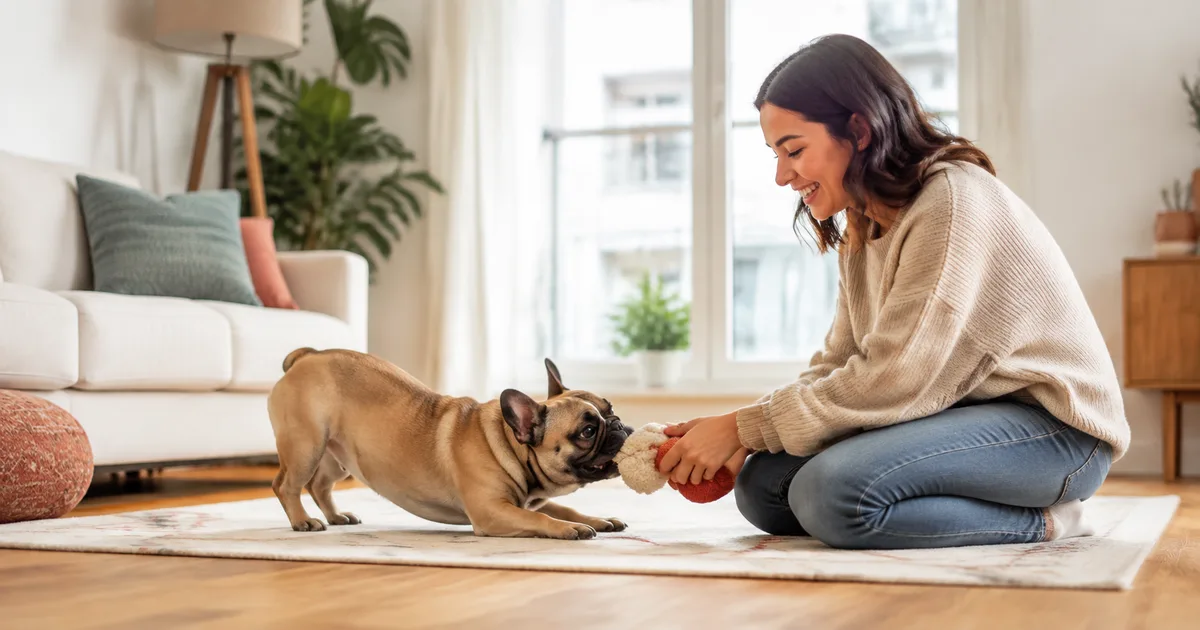
Try a soft toy exchange, a low-key tug game, or a toy search across a clear floor. Keep movements close to the ground and avoid sharp turns, repeated chasing, slippery surfaces, and jumps from furniture.
End while the dog is still coordinated and interested. If play leads to heavy panting, noisy breathing, coughing, weakness, limping, or difficulty settling, stop and arrange veterinary advice if the sign is persistent or unusual.
4. Training as activity
Hand targeting, settling on a mat, waiting at a doorway, and simple tricks provide movement and communication. Use rewards and small steps. Do not force a position, pull on the collar, or use shock, prong, choke, or physical corrections.
Training should leave the dog willing to participate. A dog that turns away, freezes, repeatedly licks their lips, or cannot perform an easy behavior may need a break, a quieter space, or a less difficult step.
5. A safe indoor route
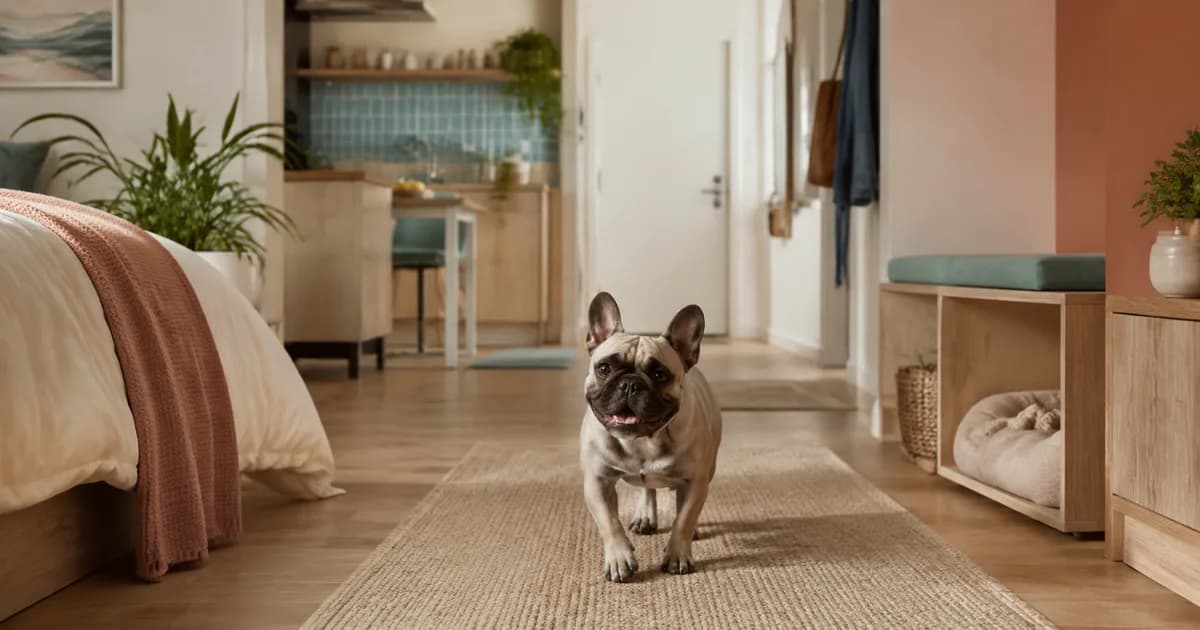
Clear a loop through the rooms your dog can access. Add non-slip runners where your Frenchie turns or gets up, move cords and small objects, and block stairs or balconies if needed. Keep the route away from hot appliances and direct sun.
This is a way to encourage gentle movement, not a track for repeated sprinting. A calm walk around the home followed by rest may be more useful than trying to increase speed or distance.
6. Outside when conditions are suitable
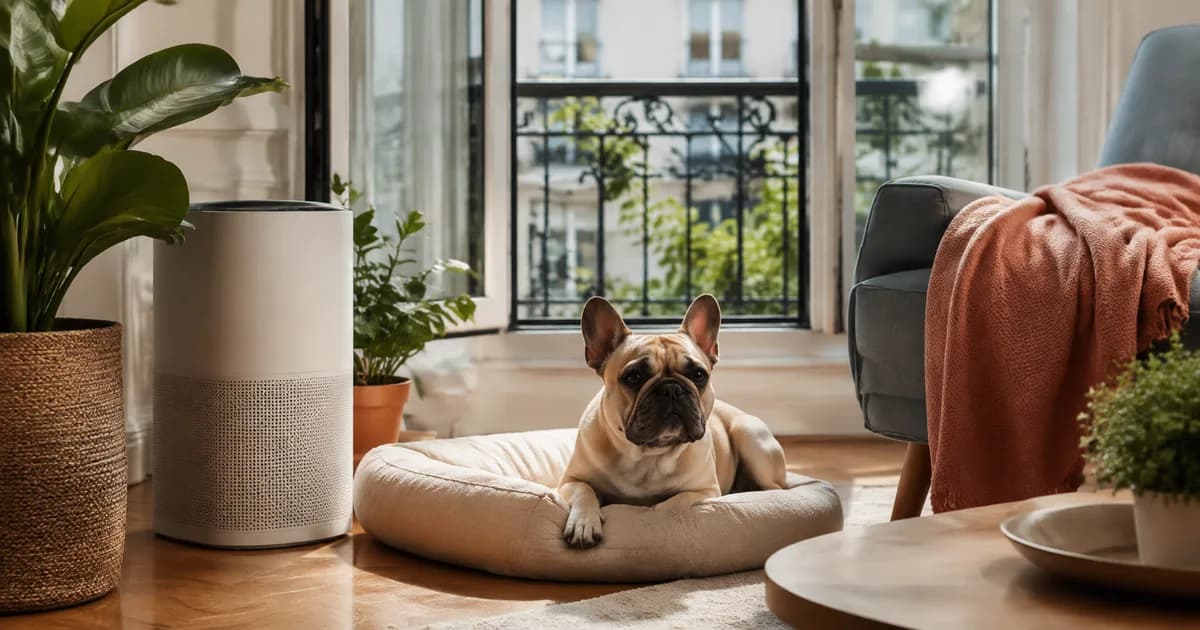
Indoor activities are helpful during heat, storms, poor air quality, illness in the household, or other temporary barriers. When outside conditions are comfortable and your veterinarian has no restrictions, let your dog sniff and move at an easy pace.
Bring water, avoid the hottest part of the day, and turn back when your Frenchie shows signs that the activity is too much. There is no universal distance or duration that is right for every dog.
How to tell whether the routine fits
Look for a dog who can participate, rest afterward, and return to normal breathing. Signs that the plan needs adjustment include persistent panting, reluctance to move, stiffness, coughing, repeated stopping, unusual irritability, or next-day soreness.
Reduced interest can also reflect pain, illness, stress, poor sleep, or a change in the environment. Do not label every change as boredom. A veterinary assessment is appropriate for a sudden or ongoing change.
A simple rotation
- Offer one sniffing or food puzzle activity.
- Add a short reward-based training session.
- Include gentle play if the dog remains comfortable.
- Provide a quiet rest period.
- Change the activity, not the dog’s limits, when enthusiasm fades.
Keep the routine flexible for age, recovery, weather, and veterinary guidance. Rest is part of a healthy activity plan.
Bottom line
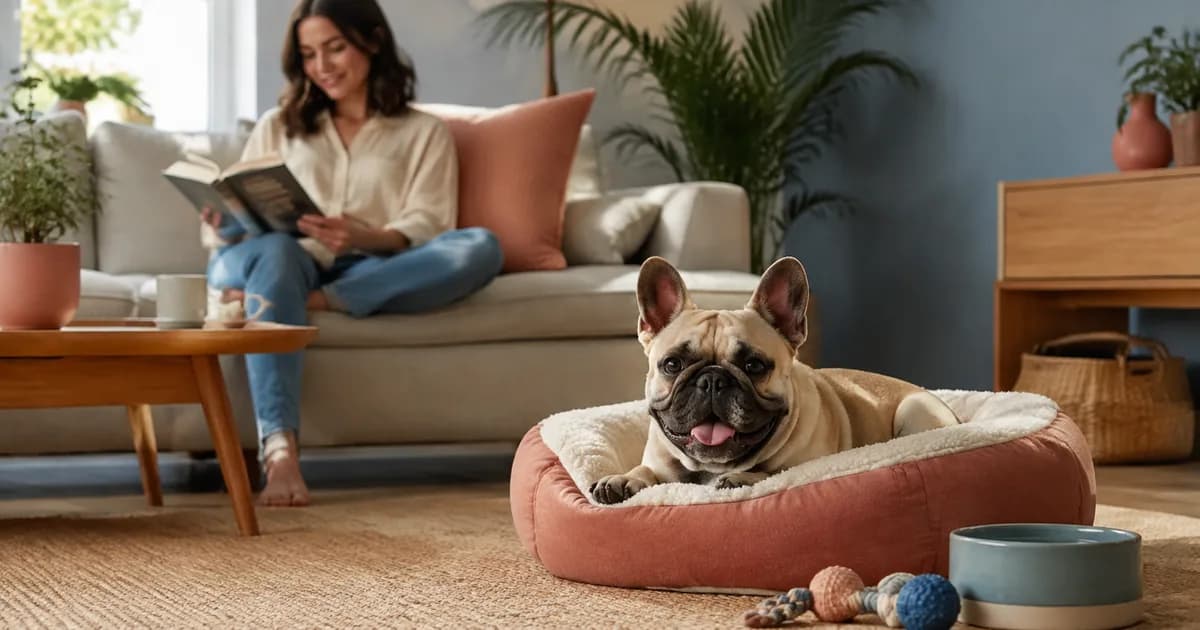
The best indoor routine gives your Frenchie choices: sniff, play gently, learn, move safely, and rest. Use a non-slip environment, watch breathing and coordination, and ask a veterinarian about any new physical limitation.
Sources
- American Kennel Club: Exercise and activities for puppies
- American Kennel Club: Is the French Bulldog the right breed for you?
- American Veterinary Society of Animal Behavior: Position on humane dog training
This article is general educational information. It does not prescribe an exercise plan or diagnose pain, breathing problems, or boredom.