Quick answer
An apartment can work for a French Bulldog when the home, building, and daily routine meet that dog’s needs. Square footage alone does not decide it. Consider toilet access, safe movement, temperature control, time alone, noise, stairs or elevators, and whether the lease allows dogs.
French Bulldogs are companion dogs, but they still need regular opportunities to move, explore, rest, and learn. Their short faces can make heat and strenuous activity harder to tolerate, so an apartment should make cooling and observation easy.
Choose the apartment guide you need
Use this article as your starting point, then open the detailed guide that matches the problem you are solving:
| If you need to… | Read this next |
|---|---|
| Arrange rest, activity, water, cooling, entry, and toilet zones | See four practical French Bulldog apartment layouts |
| Provide exercise and enrichment without a yard | Try indoor and small-space exercise ideas |
| Understand barking, snoring, hallway reactions, or neighbor concerns | Use the apartment noise guide |
| Reduce irritants or respond to wildfire smoke and poor outdoor air | Follow the apartment air-quality guide |
The sections below help you assess the whole setup. The linked guides provide the detailed plans, examples, and troubleshooting steps so this page does not repeat them.
Check the building before moving in
Read the lease instead of relying on a listing summary. Check pet permission, breed or weight restrictions, deposits, balcony rules, noise clauses, elevator access, and what happens if a dog causes damage. Ask the landlord or building manager about these points in writing.
Walk the route from the apartment to the toilet area at the times you will actually use it. A high floor, long corridor, busy elevator, or icy entrance may require more planning for a puppy, senior dog, or dog with mobility or breathing concerns.
Build a predictable home routine
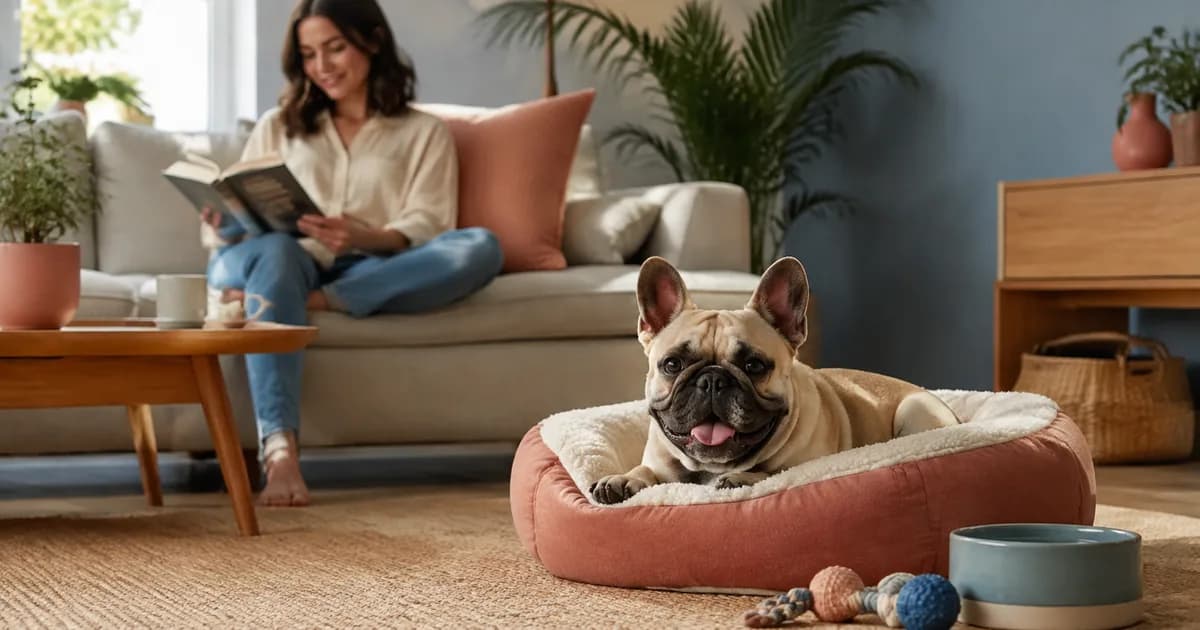
Keep sleep, meals, toilet opportunities, gentle activity, and quiet time reasonably consistent. Puppies and newly adopted dogs usually need closer supervision and more frequent toilet opportunities than settled adults. If you work away from home, arrange a responsible person or an appropriate indoor plan rather than expecting a dog to wait uncomfortably.
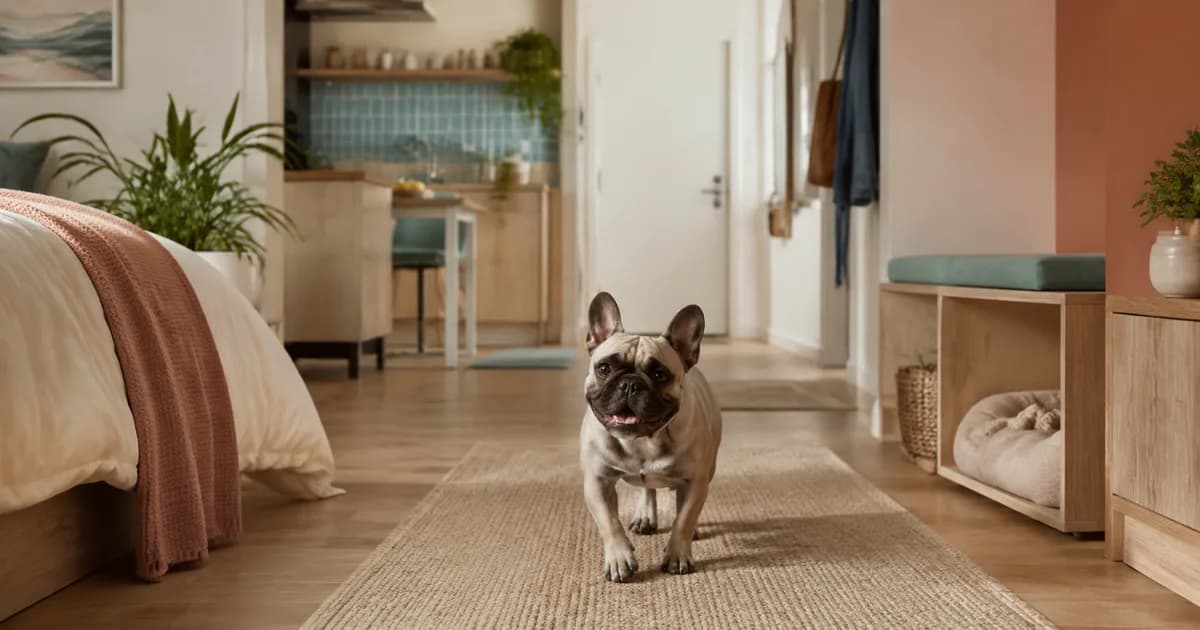
Give your Frenchie a calm sleep zone away from the door and a separate area for play or training. Use gates or closed doors during deliveries and visitors. Keep water available and make the cooler part of the home accessible. For studio, one-bedroom, open-plan, and multi-level examples, use the apartment layout guide.
Exercise without a yard
Use short, comfortable walks and indoor activities that fit your dog’s health, age, and weather. Hand targeting, scent games, food puzzles, gentle tug, and settling on a mat can provide movement and engagement without repeated sprinting or jumping. The indoor exercise guide explains how to build a varied small-space routine.
Watch the dog, not the clock. Stop for heavy or noisy breathing, coughing, weakness, reluctance, limping, overheating, or unusual recovery. Ask a veterinarian for an individualized exercise plan if your dog has a breathing, orthopedic, or weight concern.
Toilet planning on a high floor
Keep leash and harness supplies at the exit, reduce clutter, and learn your dog’s early signals. Take the dog out after waking, meals, sleep, play, and training, then adjust based on the individual. A pad or indoor grass area can be a backup when access is limited, but it should be placed consistently and cleaned well.
Sudden accidents in an adult that was previously reliable deserve veterinary attention. Do not punish accidents; review supervision and look for a medical, schedule, or stress-related change.
Noise and neighbors
Dogs may react to hallway footsteps, doors, alarms, visitors, or unfamiliar sounds. Reduce visual access to the corridor, give the dog a retreat, and reward calm observation during the day. The French Bulldog apartment noise guide separates barking and behavior triggers from snoring, reverse sneezing, and breathing sounds that may need veterinary attention.
If barking is new, intense, or accompanied by panic, pain, destruction, or escape attempts, ask a veterinarian or qualified behavior professional for help. Never use shock, prong, choke, or other aversive tools to manage apartment noise. They can add fear and do not explain what the dog should do instead.
Heat, air quality, stairs, and elevators
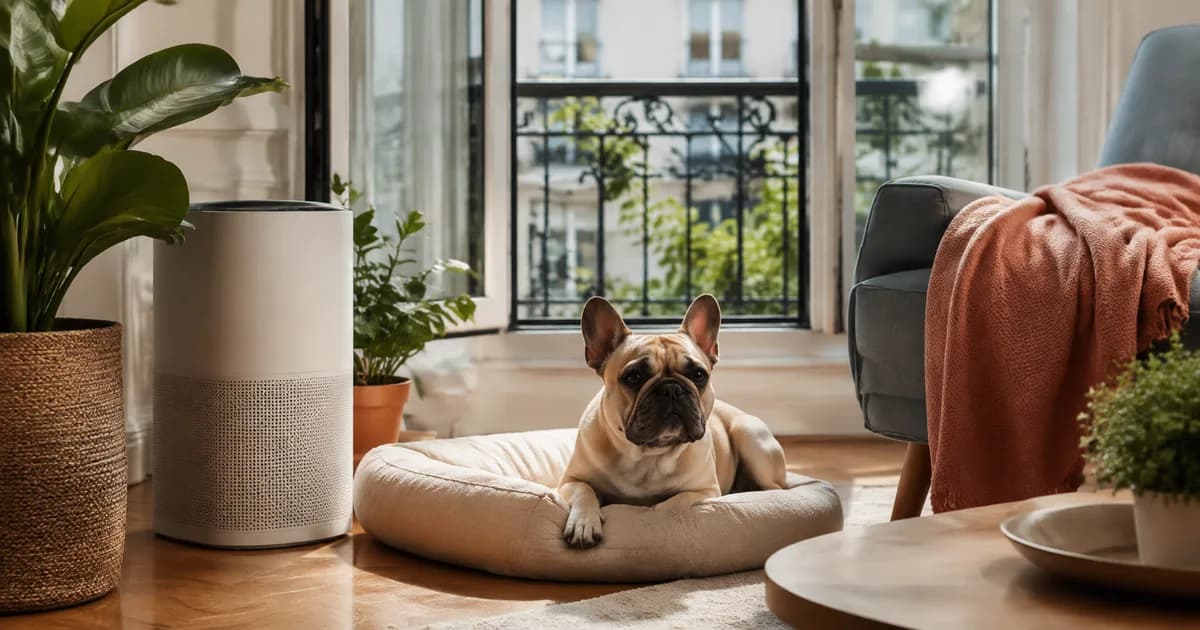
Keep the apartment cool enough for your dog and never leave a Frenchie in a parked car. Avoid strenuous activity in hot or humid conditions and give the dog a way to rest. During wildfire smoke or a poor-air alert, outdoor and ventilation plans need to change; the apartment air-quality guide covers brief bathroom trips, closed-window operation, filtration, and respiratory warning signs.
If the dog struggles with stairs or becomes distressed in an elevator, use gradual, reward-based practice or ask your veterinarian and a qualified trainer for a safer plan. Do not carry a dog by the front legs or force movement through fear. A harness, secure leash, and calm handling are more useful than rushing the dog through a difficult route.
Apartment setup checklist
- A comfortable sleep area away from the entry.
- A clear, non-slip path to the exit and water.
- Safe storage for food, cleaners, medication, cords, and small objects.
- A retreat that visitors can leave undisturbed.
- A plan for toilet access when you are working, ill, or away.
- A plan for hot weather, smoke, storms, alarms, and building maintenance.
- Current identification and a secure harness or leash.
When an apartment may not be a good fit right now
The challenge may be the combination of the dog and the building, not apartment living in general. Reconsider the setup if the home cannot stay at a comfortable temperature, the dog is routinely left without a toilet plan, the lease prohibits the dog, or stairs and travel through the building are unsafe for that individual.
Bottom line
Successful apartment living is built from predictable care, safe movement, temperature awareness, thoughtful noise management, and honest planning for the building’s constraints. Start with the whole-home checklist, then use the linked layout, exercise, noise, or air-quality guide for the part of the routine that needs more work.
Sources
- American Kennel Club: Is the French Bulldog the right breed for you?
- American Kennel Club: Best dogs for apartments
- American Kennel Club: Exercise and activities for puppies
This article is general educational information. It does not determine whether a particular dog can safely use stairs, elevators, or an apartment.