Quick answer
A French Bulldog that is limping on a back leg may still be uncomfortable even if there is no crying, yelping, or obvious reaction to touch. Dogs can show pain through a shorter stride, stiffness, reduced activity, difficulty rising, repeated licking, or simply placing less weight on one leg. Limping can also reflect weakness or poor coordination from a neurologic problem.
Common possibilities include a paw or nail injury, a muscle strain, a luxating patella, cranial cruciate ligament disease, hip disease, arthritis, trauma, or a spinal or nerve problem such as intervertebral disc disease (IVDD). The walking pattern can offer clues, but it cannot identify the cause reliably at home.
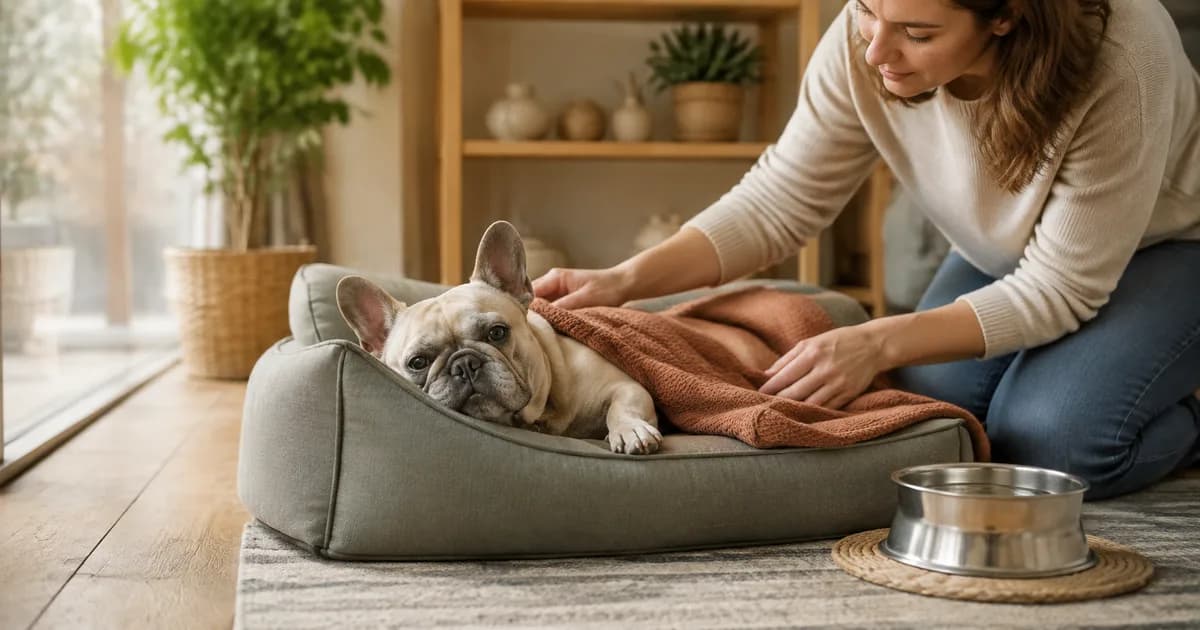
Limit running, jumping, stairs, and rough play while arranging veterinary advice. Seek urgent care if your Frenchie cannot bear weight, the leg looks deformed or very swollen, the paw feels unusually cold, there was major trauma, or you see dragging toes, knuckling, wobbling, inability to stand, or loss of bladder or bowel control.
How urgent is the limp?
| What you see | Suggested response |
|---|---|
| Collapse, inability to stand, paralysis, breathing difficulty, uncontrolled bleeding, or a badly deformed limb | Emergency veterinary care now |
| Dragging or knuckling a paw, marked wobbling, rapidly worsening weakness, or new bladder or bowel changes | Urgent neurologic assessment |
| Sudden non-weight-bearing limp, major swelling, a deep wound, a cold paw, or significant fall or collision | Same-day veterinary assessment |
| Weight-bearing limp that is new, persistent, recurrent, or getting worse | Contact your veterinarian promptly for an appointment |
| A brief mild change that fully resolves and does not recur | Continue close observation and discuss it with your veterinarian if uncertain |
These categories are practical guidance rather than a diagnosis. If your Frenchie seems distressed or you are unsure whether the limb is usable, call a veterinary clinic and describe exactly what you see.
“Not in pain” often means “not crying”
Dogs do not need to vocalize for pain to be present. Cornell University lists stiffness, limping, difficulty rising, reluctance to exercise, altered posture, excessive licking, restlessness, withdrawal, and irritability among possible pain signals. A dog may also move more normally at the clinic because excitement temporarily masks a subtle limp.
Watch for small changes around normal routines:
- taking longer to stand after sleep;
- sitting with one back leg placed out to the side;
- pausing before stairs or refusing to jump;
- shifting weight onto the front legs;
- walking normally at first but limping after activity;
- licking one paw, knee, hip, or flank repeatedly;
- becoming quieter, less playful, or resistant to being lifted.
The absence of these behaviors does not rule out a problem. Some mechanical conditions cause intermittent skipping with little obvious pain, and some neurologic conditions initially look like an unusual limp.
What the walking pattern may suggest
The pattern helps a veterinarian decide where to look first. It does not confirm a diagnosis.
| Pattern | Possibilities a veterinarian may consider |
|---|---|
| Carries the leg for several steps, then walks normally | Luxating patella, paw irritation, or another intermittent knee problem |
| Stiff after rest or slow to rise | Knee disease, hip disease, arthritis, or muscular pain |
| Limp appears after running or play | Soft-tissue strain, partial ligament injury, joint disease, or paw damage |
| Constantly avoids placing the foot down | Fracture, dislocation, severe soft-tissue injury, painful joint, or serious paw injury |
| Scuffs nails, drags toes, knuckles, crosses the legs, or looks wobbly | Spinal cord, nerve, or other neurologic disease |
| Bunny hops when running | Hip, knee, spinal, or gait variation; this pattern is not specific to hip dysplasia |
| Licks one foot or suddenly stops on a walk | Torn nail, pad injury, foreign material, sting, or other paw pain |
Record whether the change is in one leg or both, when it started, and whether it is worse after rest or activity. A short video from the side and from behind on a non-slip surface can be valuable if the limp disappears at the clinic. Do not make an unstable dog walk repeatedly for filming.
Seven cause groups veterinarians consider
1. Paw, pad, toe, or nail injury
A torn nail, split pad, puncture, burn, sting, inflamed nail bed, or material caught between the toes can change weight bearing. Frenchies may lick the area, but some simply shorten the stride. Look at the top and bottom of the paw in good light if your dog allows it. Stop if the dog resists or the area is painful.
Do not dig into the paw, pull an embedded object, cut a damaged nail, or apply human antiseptic or pain cream without veterinary direction. A puncture can look small at the surface while extending deeper.
2. Muscle, tendon, or other soft-tissue injury
Slipping on a smooth floor, landing awkwardly, accelerating suddenly, or returning to hard exercise too quickly can strain soft tissues. Iliopsoas injury, for example, may cause a subtle shortened hind-limb stride rather than dramatic non-weight-bearing lameness. Soft-tissue injuries can be difficult to localize without a structured examination, and ordinary X-rays may not show the injured muscle or tendon.
Resting for a few hours and looking better does not identify the tissue involved. Recurring exercise-related limping deserves examination before normal play resumes.
3. Luxating patella
Patellar luxation occurs when the kneecap moves outside its normal groove. A characteristic pattern is a sudden skip on three legs followed by apparently normal walking after the dog stretches or shakes the limb. Mild cases may cause little obvious pain, while more advanced cases can become frequent, painful, and associated with arthritis.
A veterinarian diagnoses and grades patellar luxation by examining the knee. X-rays may be used to assess limb alignment or other joint disease. Do not try to push the kneecap into place yourself. Treatment ranges from monitoring and activity planning to surgical correction, depending on the grade, symptoms, limb shape, age, and other findings.
4. Cranial cruciate ligament disease
The cranial cruciate ligament stabilizes the knee. In dogs, disease often develops through gradual ligament degeneration rather than one dramatic accident. A partial tear can cause a mild or intermittent limp before progressing. Possible signs include stiffness after rest, difficulty rising or sitting squarely, reduced willingness to jump, knee swelling, loss of thigh muscle, or a click associated with meniscal injury.
The American College of Veterinary Surgeons notes that dogs may not cry or hold the leg up constantly even when cruciate disease is painful. Diagnosis may involve knee stability tests, sometimes with light sedation, and radiographs to assess swelling, arthritis, and surgical planning.
5. Hip dysplasia or osteoarthritis
Hip dysplasia is abnormal hip development and joint laxity that can lead to arthritis. Signs can include hind-limb stiffness, difficulty rising, reduced willingness to jump, loss of thigh muscle, a swaying gait, or lameness. However, the severity of signs does not always match the appearance of the hips on X-rays.
Arthritis may also affect the knee, hock, toes, or other joints. A physical examination and correctly positioned radiographs help determine whether a visible joint change explains the current limp. Read our detailed French Bulldog hip dysplasia guide for the diagnostic and treatment options.
6. IVDD, spinal disease, or nerve dysfunction
What looks like a back-leg limp may actually be weakness, abnormal paw placement, or loss of coordination. Toe dragging, worn nails on one side, knuckling, crossing the hind legs, wobbling, back or neck pain, and changes in bladder function raise concern for neurologic disease.
French Bulldogs can develop IVDD, and deterioration can be rapid. If neurologic signs are present, limit movement and seek veterinary assessment promptly. Do not pinch the toes to test pain sensation. Our French Bulldog IVDD recovery guide explains neurologic warning signs, treatment paths, and recovery milestones.
7. Trauma, bone disease, infection, or systemic illness
Fractures, dislocations, growth-plate injuries, bone tumors, joint infection, immune-mediated joint disease, and tick-borne or other systemic illnesses can cause lameness. These problems may be more likely when there is major trauma, fever, lethargy, loss of appetite, swelling, several painful joints, or lameness that shifts between legs.
Age changes the list of possibilities. A growing puppy, a healthy young adult, and an older dog with gradual stiffness require different diagnostic thinking. Persistent or unexplained lameness should not be assigned to “getting older” without an examination.
What you can safely check at home
Start by observing before touching the leg. Note how your Frenchie stands, sits, rises, turns, and walks a few necessary steps. Compare the paws and legs visually for swelling, bleeding, a torn nail, a pad injury, or an obvious foreign object.
Until the cause is known:
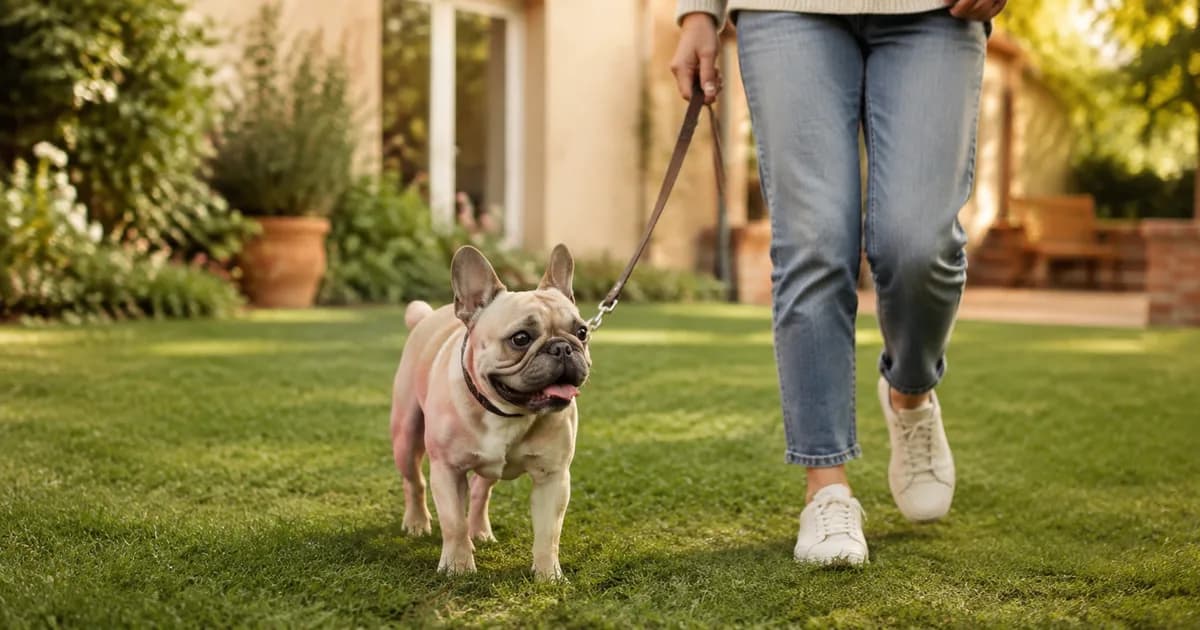
- use brief, controlled leash trips for toileting;
- prevent running, jumping, stairs, furniture launches, and rough play;
- place rugs or runners over slippery routes;
- separate your dog from pets that trigger chasing or wrestling;
- record the onset, activity before the limp, and any changes in appetite or behavior;
- photograph visible swelling or paw damage and take one short gait video if safe.
Do not repeatedly bend the hip or knee, force the leg through a range of motion, massage a painful area, apply a tight bandage, or try to relocate a joint. Stop touching the limb if your dog tenses, turns toward your hand, growls, or tries to move away.
What not to give for pain
Do not give ibuprofen, naproxen, acetaminophen, aspirin, topical pain gels, or medication left from another animal unless a veterinarian specifically directs you to use that exact product and dose for this dog. Human products can be toxic, interact with veterinary medication, or complicate treatment.
If your Frenchie already receives an anti-inflammatory, steroid, supplement, or other medication, tell the clinic what was given, how much, and when. Do not combine anti-inflammatory drugs or increase a dose on your own.
What the veterinarian will examine
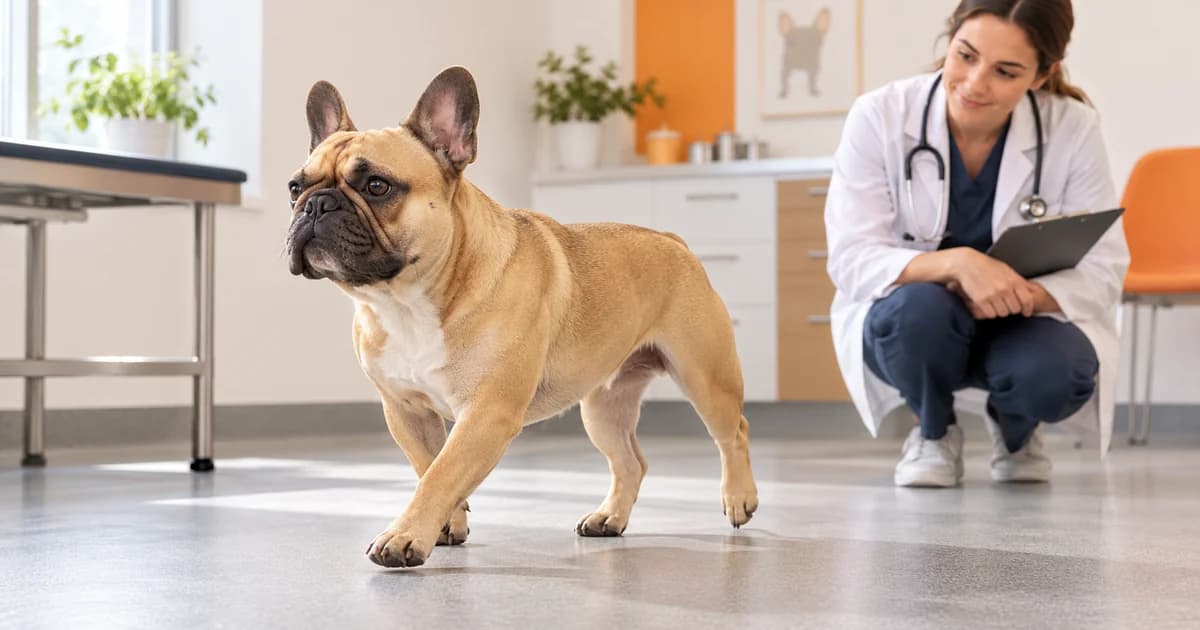
The visit usually begins with the history: sudden or gradual onset, recent exercise or trauma, whether the limp shifts, and how it changes after rest. The veterinarian may then watch your Frenchie walk from the side, front, and rear before examining the dog while standing and lying down.
The hands-on examination may work from the toes upward, comparing both hind limbs and checking muscles, tendons, joint motion, swelling, heat, and pain. The hips and spine may also be assessed even when one knee appears to be the problem. A neurologic examination checks paw placement, coordination, reflexes, and other findings that help distinguish limb pain from nerve or spinal cord dysfunction.
Possible next tests include:
- Radiographs: useful for fractures, joint alignment, arthritis, bone lesions, and some indirect signs of soft-tissue injury.
- Sedated examination: may allow a more accurate knee or hip assessment when pain, fear, or muscle tension interferes.
- Ultrasound: useful for selected tendons, muscles, and other soft tissues.
- CT or MRI: considered when complex bone, spinal cord, nerve, or soft-tissue disease is suspected.
- Blood, urine, or joint-fluid tests: used when infection, inflammation, systemic illness, or medication safety needs evaluation.
Testing should follow the examination. Taking an X-ray of the wrong region may miss the actual source, and a normal X-ray does not rule out every ligament, muscle, nerve, or disc problem.
How treatment differs by cause
There is no single treatment for a back-leg limp. A superficial paw injury may need cleaning and protection. A soft-tissue injury may require a structured rest and rehabilitation plan. Symptomatic patellar luxation or an unstable cruciate-deficient knee may require surgical consultation. Hip or arthritic pain may be managed with body-condition control, tailored exercise, rehabilitation, prescribed medication, and sometimes surgery. Progressive IVDD can require urgent imaging and decompression.
This is why using leftover medication and waiting for the gait to “work itself out” can be risky. Pain relief may make activity look easier without correcting instability, a fracture, or spinal cord compression.
Supporting mobility after diagnosis
Once the cause is known, ask for a specific return-to-activity schedule. Increase duration, speed, terrain, and play separately so a setback is easier to identify. Keep nails at a functional length and provide secure footing where your Frenchie gets up, turns, and eats.
A lean body condition supports movement and makes assisted care easier. The number on a breed chart cannot determine the right weight by itself, so combine regular weigh-ins with veterinary body-condition assessment. You can use the French Bulldog weight guide and weight tracker to organize changes over time.
If you want to become more familiar with gait and mobility observations, use the Frenchie mobility awareness quiz. It is an educational tool and cannot diagnose the cause of a limp.
What to remember
A French Bulldog limping on a back leg is showing altered function even when there is no crying. Observe the pattern, restrict high-impact movement, avoid human medication and joint manipulation, and arrange veterinary assessment for a new, persistent, recurrent, or worsening limp. Treat non-weight-bearing lameness, major trauma, deformity, rapid weakness, knuckling, wobbling, or bladder changes as urgent.
Sources
- Cornell University College of Veterinary Medicine: What to expect when taking your limping dog to the veterinarian
- Cornell University College of Veterinary Medicine: Recognizing pain in dogs
- Merck Veterinary Manual: Overview of lameness in small animals
- American College of Veterinary Surgeons: Cranial cruciate ligament disease
- American College of Veterinary Surgeons: Patellar luxations
- Cornell University College of Veterinary Medicine: Iliopsoas injury
- Cornell University College of Veterinary Medicine: Canine hip dysplasia
This article is educational and does not diagnose the cause of lameness or replace veterinary care.