
Quick answer
A French Bulldog recovering from intervertebral disc disease (IVDD) may need several weeks to several months. A dog with pain but normal walking can follow a very different course from a dog recovering from paralysis or spinal surgery. The most useful milestones are controlled pain, stable or improving neurologic function, normal urination, safe supported movement, and a gradual return to activity approved by the veterinary team.
The timeline below is a planning guide, not a promise. Your Frenchie's recovery depends on where the damaged disc is located, how much spinal cord function remains, whether signs are stable or worsening, and whether treatment is medical or surgical. Follow the discharge plan from the veterinarian or veterinary neurologist even when it differs from a general timeline.
Seek emergency veterinary care now if your Frenchie suddenly cannot stand or walk, develops rapidly worsening weakness, drags or knuckles the paws, loses bladder control, has severe unrelenting pain, or has trouble breathing. Move the dog as little as practical during transport. Do not test “deep pain” by pinching the toes at home; interpreting that response requires a veterinary neurologic examination.
French Bulldog IVDD recovery at a glance
| Stage | What may happen | Owner priorities |
|---|---|---|
| First hours | Examination, pain control, neurologic grading, and possible referral or imaging | Prevent jumping and twisting; follow emergency transport advice |
| Days 1–3 | Medical stabilization or surgery; bladder function and pain are monitored | Learn the medication, confinement, lifting, and toilet plan |
| Week 1 | Rest at home or continued hospital care; incision and neurologic function are checked | Give medication exactly as prescribed and track changes daily |
| Weeks 2–4 | Protected healing; selected rehabilitation may begin under guidance | Maintain restriction, prevent falls, and attend rechecks |
| Weeks 4–6 | The veterinary team may reassess walking, pain, bladder function, and activity limits | Increase activity only when specifically cleared |
| Weeks 6–12 | Strength, balance, and endurance may continue to improve | Progress controlled exercise slowly and watch for setbacks |
| After 3 months | Some dogs are fully active; others retain weakness, wobbliness, or bladder needs | Build a sustainable mobility plan and remain alert for recurrence |
Recovery is rarely a smooth line. A dog may improve quickly at first and then appear to plateau. Another may regain standing before coordinated walking or regain walking before reliable bladder control. Compare your dog with their previous examination, not with a dramatic online recovery video.
Why IVDD recovery timelines vary
IVDD describes disease of the discs between the vertebrae. When disc material protrudes or extrudes into the spinal canal, it can cause pain, compress the spinal cord or nerve roots, and disrupt communication between the brain and limbs. A neck disc can affect all four limbs, while a thoracolumbar disc more often affects the hind limbs.
Veterinarians estimate prognosis using several pieces of information:
- Walking ability: A dog that can still walk, even unsteadily, starts from a different neurologic level than a dog that is paraplegic.
- Pain perception: Deep pain perception is a clinical finding assessed by a veterinarian. Its presence or absence strongly affects prognosis in severely affected dogs.
- Speed of change: Rapidly progressing weakness or paralysis may require urgent referral and imaging.
- Bladder function: Inability to empty the bladder safely adds nursing needs and raises the risk of urine scald and urinary infection.
- Location and type of disc problem: Cervical and thoracolumbar disease can cause different signs and may require different surgical approaches.
- Treatment choice: Mild, stable cases may be managed medically. Severe deficits, repeated episodes, uncontrolled pain, or deterioration often prompt surgical discussion.
- Other health needs: Body condition, airway disease, orthopedic problems, and the dog's ability to tolerate anesthesia or rehabilitation can affect the plan.
The American College of Veterinary Surgeons describes recovery as a process that commonly spans weeks to months. It also emphasizes that neurologic function at evaluation is closely tied to outcome. That is why a calendar alone cannot predict when a particular Frenchie will walk normally.
Stage 1: the first 24 hours
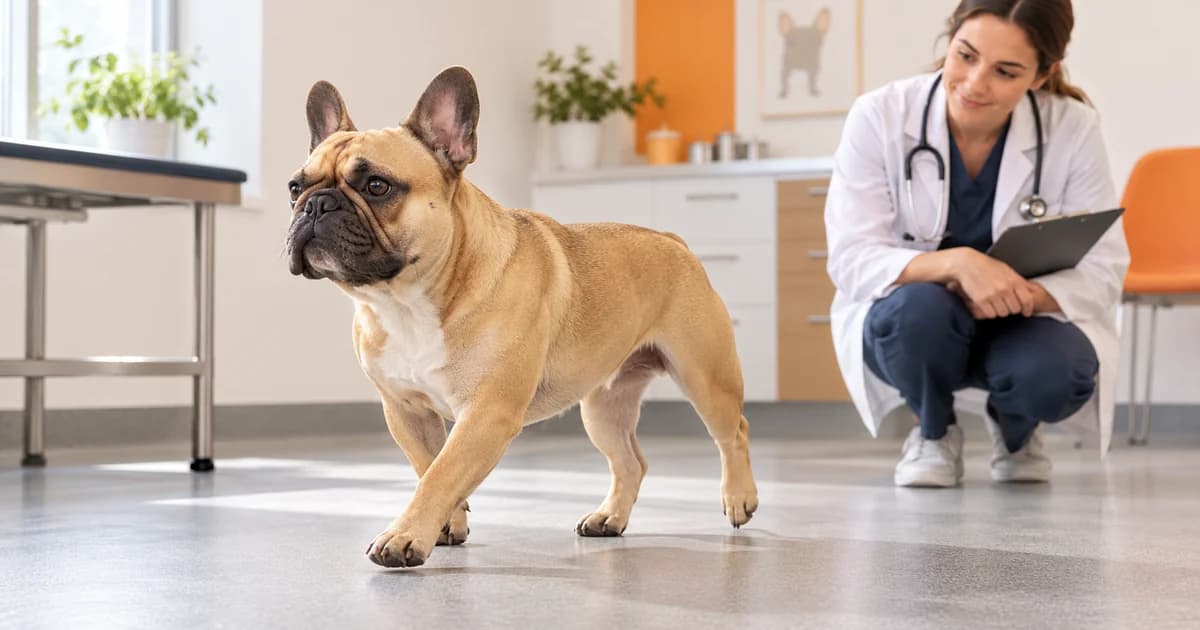
The first goal is to stop unnecessary movement and determine whether the problem is stable, painful, or neurologically progressive. A veterinarian may assess posture, gait, reflexes, limb position, spinal pain, bladder function, and pain perception. Plain X-rays can identify some bone changes and rule out certain injuries, but they do not show the spinal cord and every herniated disc clearly. CT, MRI, or another specialized study may be recommended when the findings could change treatment or guide surgery.
Until assessed, keep your Frenchie on one level, block stairs and furniture, and use a harness for a brief toilet trip only if the dog can walk safely. If the dog cannot walk, call the clinic for transport instructions. Supporting the chest and pelvis together can reduce bending, but a painful dog may bite even when normally gentle.
Do not give ibuprofen, naproxen, acetaminophen, aspirin, leftover steroids, or another pet's medication. Combining or switching anti-inflammatory drugs without veterinary direction can cause serious harm.
Stage 2: days 1–3 after diagnosis or surgery
During the first few days, the veterinary team focuses on comfort and neurologic stability. A medically managed dog may go home with prescribed medication and strict activity limits. A surgical patient may remain hospitalized for pain control, incision monitoring, assisted movement, and bladder care. ACVS notes that many surgical patients are discharged within several days, but the exact stay varies.
Before leaving the hospital, ask for written answers to these questions:
- How confined should my dog be, and for how long?
- May my dog walk to toilet, and should I use a support sling?
- Is my dog emptying the bladder independently?
- Which changes require an urgent call or emergency return?
- When is the next recheck or suture removal?
- Which rehabilitation exercises, if any, are approved now?
Medication can make a dog look more comfortable before the disc and surrounding tissues have healed. Comfort is not permission to run, jump, use stairs, or play.
Stage 3: the first week at home
Set up a recovery area before your Frenchie arrives. It should be large enough to lie comfortably, turn around, and change position, yet small enough to prevent pacing or sudden acceleration. Use firm, non-slip footing with clean, dry bedding. Keep the area away from stairs, active pets, children who may excite the dog, and hot rooms; French Bulldogs also need comfortable airflow because of their short-muzzled anatomy.
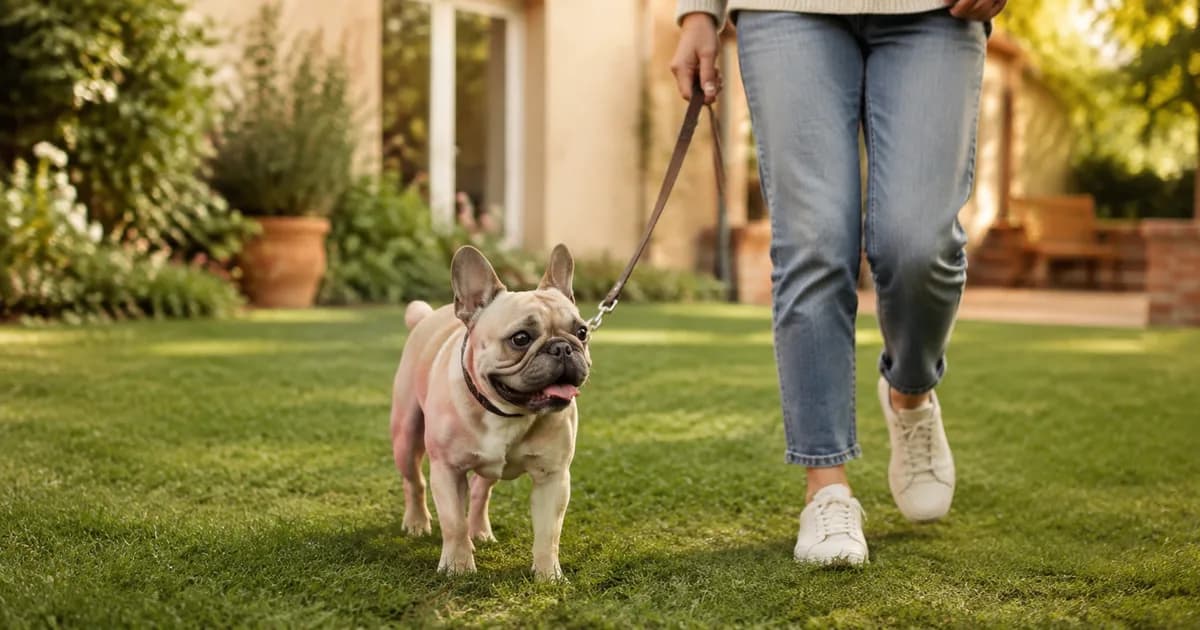
For toilet trips, follow the clinic's instructions. Some dogs need a harness and a sling under the abdomen or pelvis. Keep trips short and controlled. Do not let the sling lift the dog so high that the spine twists, and do not allow the rear feet to scrape along rough ground.
Check and record the following at least daily:
- ability to rise, stand, and take steps;
- paw placement, knuckling, crossing, or toe dragging;
- pain behaviors such as trembling, guarding, crying, or refusing to settle;
- urination frequency and whether the bladder seems to empty;
- bowel movements, appetite, water intake, and vomiting or diarrhea;
- incision redness, swelling, discharge, odor, or opening after surgery;
- skin redness over the hips, ankles, or other pressure points in a dog that cannot reposition.
A short video of the same controlled movement each day can help the veterinary team compare function. Do not repeatedly walk an unstable dog just to document progress.
Stage 4: weeks 2–4 — protected healing
This period often feels difficult because pain may be better while normal activity is still unsafe. The 2022 ACVIM consensus statement on acute thoracolumbar disc extrusion recommends at least four weeks of restricted activity for medically managed dogs. Restriction generally means confinement to a crate or small safe area, with exceptions for prescribed rehabilitation and controlled toileting. The treating veterinarian may choose a longer or different restriction period based on the location, surgery, neurologic findings, and progress.
Rehabilitation is individualized. It may include supported standing, carefully guided weight shifting, passive range-of-motion work, or later an underwater treadmill. These activities are not interchangeable, and starting the wrong exercise too early can cause pain or falls. Cornell's IVDD overview describes rehabilitation as a gradual program that can include home exercises and progressively longer walks.
A randomized clinical trial of dogs recovering from thoracolumbar surgery found that early postoperative rehabilitation was safe in the studied dogs, but a more intensive program did not improve the rate or level of recovery compared with basic rehabilitation. The practical lesson is to use a tailored program rather than assuming that more exercise produces faster healing.
Stage 5: weeks 4–6 — reassessment and controlled progression
Around this stage, many dogs have a recheck that considers pain, gait, paw placement, strength, bladder function, medication needs, and wound healing. Some can begin a structured increase in leash walking. Others still need strict restriction or specialist rehabilitation.
Progression may involve several short, slow walks on level non-slip ground before any increase in duration. Change one variable at a time. A longer walk, faster pace, new surface, stairs, and play should not all return together. Stop and contact the veterinary team if pain returns or if walking becomes weaker, more wobbly, or less coordinated.
Do not use “walking again” as the only recovery test. A dog may take steps while still falling, scuffing nails, tiring quickly, or emptying the bladder poorly. Safe function matters more than the first steps.
Stage 6: weeks 6–12 and beyond
Nerve recovery can continue after the initial healing period. Strength, balance, endurance, and coordination may improve at different rates. Some dogs regain independent walking but keep a wider stance, mild wobble, or occasional toe scuffing. Dogs with more severe spinal cord injury may require months of nursing and rehabilitation, and some retain permanent mobility or continence limitations.
Recovery aids can include non-slip runners, a well-fitted support harness, ramps approved by the veterinary team, low-entry bedding, and raised or repositioned bowls when neck movement is restricted. A wheelchair may support quality of life for selected dogs, but fitting and skin checks should be guided by a rehabilitation professional.
Maintaining a lean body condition can make assisted movement easier and reduce excess load on the limbs. Use our French Bulldog weight guide and weight tracker to organize observations, then ask your veterinarian to set the appropriate target for your dog.
Medical management versus surgical recovery
| Medical management | Surgical management |
|---|---|
| Usually considered for mild, stable signs, especially a first episode | Often discussed for severe or worsening neurologic deficits, uncontrolled pain, repeated episodes, or failure of medical care |
| Relies on prescribed medication plus strict activity restriction | Removes compressive disc material when imaging and examination support surgery |
| Improvement in pain can occur before healing is complete | Hospital care may include bladder management, incision care, and assisted mobility |
| Deterioration requires prompt reassessment | Recovery still requires restriction and a staged return to activity |
Neither path has one guaranteed schedule. If a medically managed dog becomes weaker or loses the ability to walk, treat that as a new urgent event. If a surgical patient worsens, develops severe pain, cannot urinate, or has an incision problem, contact the surgical team immediately.
Bladder, bowel, and skin care
A dog that cannot walk normally may also have impaired bladder emptying. Dribbling urine does not prove that the bladder is empty. If expression is required, have a veterinary professional demonstrate the technique and confirm how often it should be done. Seek help if the bladder feels difficult to express, urine changes color or odor, the dog strains, or the abdomen becomes painful.
Keep bedding dry and inspect the skin. Dogs with limited movement can develop urine scald or pressure sores. Repositioning, padding, hygiene, and assisted movement should follow the care plan, since pulling or twisting a painful dog can worsen discomfort.
Constipation or delayed bowel movements may occur with reduced activity, pain, stress, or medication. Do not add laxatives, enemas, or supplements without veterinary advice.
Signs of improvement and signs of a setback
Useful improvement markers include easier settling, reduced pain, stronger supported standing, better paw placement, more coordinated steps, and reliable bladder emptying. Appetite and personality matter too, but they do not replace neurologic progress.
Contact the veterinary team promptly if you notice:
- new pain, trembling, a hunched posture, or reluctance to move;
- weaker walking, more falls, new knuckling, or dragging toes;
- loss of a function your dog had regained;
- inability to stand, paralysis, or a sudden change in bladder or bowel control;
- inability to urinate, urine scald, blood in the urine, or a strong new odor;
- an open, hot, swollen, or draining surgical incision;
- labored breathing, collapse, pale or blue gums, or marked lethargy.
A gait change can also arise from the paw, knee, hip, muscles, or nerves. Our hip dysplasia guide covers another cause of hind-limb stiffness. A veterinary examination is needed when the source is unclear.
Recurrence in French Bulldogs
Recovery from one episode does not make the remaining discs normal. A retrospective study of surgically treated French Bulldogs reported recurrence in more than half of the dogs during the study's follow-up, with almost one quarter experiencing a recurrence within 12 months. That finding applies to the studied referral population and should not be used to predict one dog's exact risk, but it shows why long-term awareness matters in this breed.
After the veterinary team clears normal activity, aim for controlled, regular exercise, a healthy body condition, secure footing, and fewer uncontrolled jumps from furniture. These steps support safer movement but cannot guarantee prevention. Use the mobility awareness quiz to learn which observations are worth recording.
Questions to ask at each recheck
- Which neurologic findings have improved, stayed stable, or worsened?
- Is bladder emptying normal?
- Does activity restriction continue, and what exactly is allowed?
- Which exercise should we add next, at what duration and frequency?
- Should a veterinary rehabilitation professional assess my dog?
- What signs should send us to emergency care?
- When is the next review, and what milestone are we looking for?
What to remember
French Bulldog IVDD recovery is best measured in functional milestones rather than a promised date. Protect the spine during the early healing period, follow the exact medication and restriction plan, monitor walking and bladder function, and increase activity only with veterinary guidance. Rapid worsening, loss of walking, severe pain, or loss of bladder control needs urgent assessment.
Sources
- American College of Veterinary Internal Medicine: Consensus statement on acute canine thoracolumbar intervertebral disc extrusion
- American College of Veterinary Surgeons: Intervertebral Disc Disease
- Cornell University College of Veterinary Medicine: Intervertebral disc disease
- UC Davis Veterinary Medicine: Disc Disease
- Zidan et al.: Randomized clinical trial of postoperative rehabilitation after thoracolumbar disc surgery
- Leu et al.: Recurrence rate of IVDD in surgically treated French Bulldogs
This article is educational and does not diagnose IVDD or replace an examination, treatment plan, or emergency advice from a veterinarian.