
Quick answer
French Bulldog skin fold dermatitis, also called intertrigo, develops where two skin surfaces rub and trap moisture with little airflow. The first changes may be mild redness or dampness. Odor, discharge, crusts, broken skin, swelling, or pain can mean the fold is more inflamed or has a secondary bacterial or yeast problem.
Do not assume every red or smelly fold is an infection. Allergy, parasites, friction, excessive moisture, conformation, and other skin disorders can look similar or occur together. A veterinarian may need to examine the fold and check a sample under a microscope before choosing treatment.
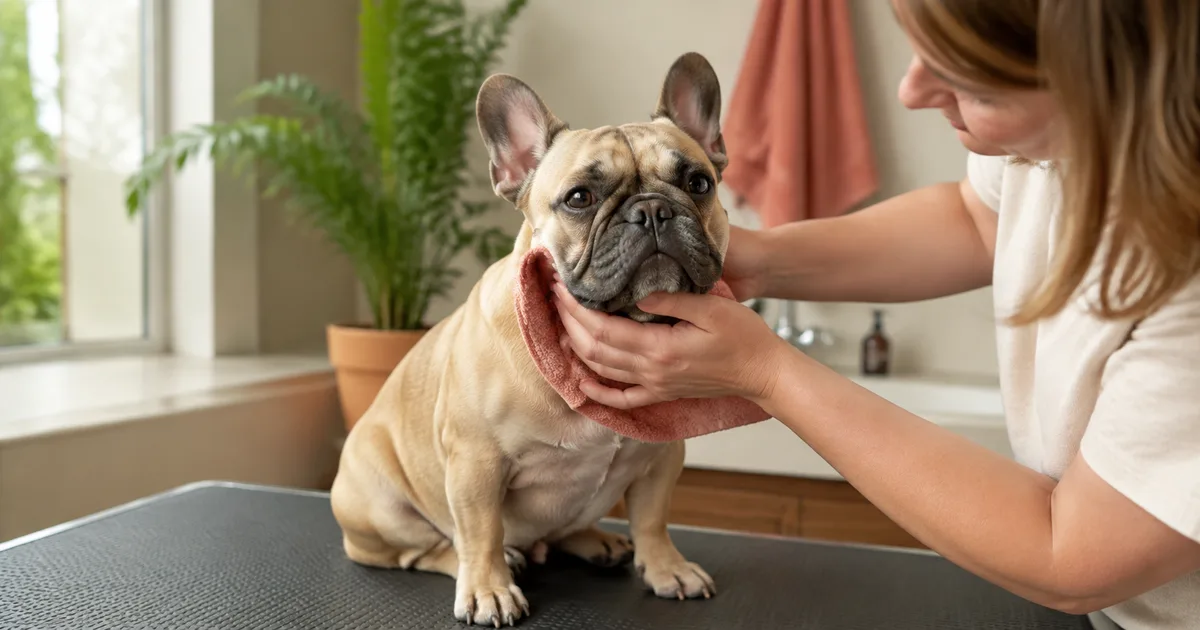
If the skin is intact and your Frenchie is comfortable, gently remove surface moisture with a clean soft cloth and pat the fold dry. Stop if it hurts. Do not apply a human cream, essential oil, peroxide, alcohol, powder, leftover medication, or a medicated wipe unless your veterinarian has approved that exact product for your dog.
When does a skin fold problem need a vet?
Use the most serious sign you see rather than waiting for several symptoms to appear.
| What you notice | What to do |
|---|---|
| Mild dampness or faint redness, no pain, no odor, and intact skin | Keep the area gently dry, take a photo, and monitor closely. Ask your vet about a suitable routine if it does not settle or keeps returning. |
| Strong odor, persistent redness, itching, rubbing, crusts, hair loss, discharge, or repeated flare-ups | Arrange a veterinary appointment. These signs cannot reliably distinguish bacteria, yeast, allergy, friction, or another cause at home. |
| Marked pain, swelling, pus, bleeding, an ulcer, rapidly spreading redness, or a deep tail-pocket sore | Seek prompt veterinary care. These can indicate more severe inflammation or deeper infection. |
| Facial swelling, breathing difficulty, collapse, severe weakness, or rapid deterioration | Seek emergency veterinary care now. Do not wait for an online result or try another product first. |
Skin beside the eye deserves extra caution. Squinting, a closed eye, cloudiness, marked redness of the eye, or sudden eye discharge can indicate an eye problem rather than only a skin-fold problem and should be assessed promptly.
What is skin fold dermatitis?
Skin fold dermatitis is inflammation where closely opposed skin surfaces create friction, warmth, moisture, and poor ventilation. Veterinary references also use the terms intertrigo and fold pyoderma. Merck classifies fold pyoderma as a surface pyoderma and lists facial, lip, neck, armpit, vulvar, and tail folds among higher-risk warm, moist areas.
Healthy canine skin already carries microorganisms. A fold does not become infected simply because bacteria are present. Trouble develops when the local skin barrier and environment change enough to support overgrowth and inflammation. This distinction matters because repeatedly treating odor without finding the trigger can allow the problem to return.
The Merck Veterinary Manual overview of canine pyoderma explains that infections are often secondary to another factor, including allergy, parasites, local trauma, keratinization disorders, endocrine disease, or an anatomical predisposition such as deep folds.
Why French Bulldogs are at higher risk
French Bulldogs often have facial and lip folds where skin remains in close contact. Some also have a tight or deep tail pocket. Friction, saliva, tears, heat, humidity, bathing, and incomplete drying can make these spaces stay damp.
This is a documented breed risk, not just an owner impression. A 2022 VetCompass study using UK primary-care records from more than 900,000 dogs found that French Bulldogs had about 25.9 times the odds of a recorded skin fold dermatitis diagnosis compared with crossbred dogs. About 2.7% of French Bulldogs in that study had a diagnosis recorded during the study year. The figures describe a population, not the risk or severity for one individual dog, and clinical records may miss milder unreported cases.
A separate VetCompass study found that French Bulldogs had roughly 11.2 times the odds of skin fold dermatitis compared with dogs that were not French Bulldogs after adjustment for factors in the dataset. Together, these studies support regular fold checks while avoiding the false idea that every Frenchie will develop the condition.
Signs to check for
Look inside the fold in good light without pulling hard on sore skin. Compare it with the same area on a normal day.
Common changes include:
- pink, red, or darkened skin;
- dampness, greasiness, or matted hair;
- a musty, sour, or unusually strong odor;
- brown, yellow, green, bloody, or sticky discharge;
- crusts, scales, small bumps, hair loss, cracks, or an open sore;
- licking, scratching, face rubbing, head shyness, or flinching; and
- swelling or warmth around the fold.
The most common sites are not limited to the nose wrinkle. Check facial folds, lip folds, the skin beneath the chin, armpits, groin or vulvar folds, and the tail pocket if your dog has one. Merck also notes that yeast can occur alongside bacterial pyoderma, which is one reason appearance and smell alone are not enough to choose treatment.
Dermatitis, bacterial infection, or yeast?
These labels overlap, but they are not interchangeable:
- Dermatitis means the skin is inflamed. Friction and moisture can cause inflammation before infection is confirmed.
- Bacterial pyoderma means bacteria are involved in a skin infection. Fold pyoderma is usually considered a surface infection, but deeper disease can occur.
- Yeast overgrowth can cause redness, odor, greasiness, and itch and may occur at the same time as bacterial disease.
- Allergic or parasitic skin disease can drive scratching and damage the skin barrier, setting up repeated secondary infections.
A photograph can document change, but it cannot show which microorganisms are active or whether the problem is superficial or deep. That is why using an antifungal, antibiotic, or steroid based only on color or smell can miss the cause and sometimes complicate the next examination.
Safe steps before the appointment
If the area is mildly irritated, the skin is closed, and your dog allows gentle handling:
- Take a clear photo before cleaning. Include one close view and one wider view showing the location.
- Note the pattern. Record when it started, odor, discharge, itching, pain, recent bathing, weather, food changes, parasite prevention, and every product already used.
- Remove surface moisture gently. Use a clean, soft cloth or gauze and pat dry. Do not scrub, scrape crusts, or force open a painful fold.
- Prevent extra rubbing when possible. Keep nails managed and interrupt persistent scratching or face rubbing safely while arranging advice.
- Ask before using a medicated product. The location matters: a wipe suitable for body skin may not be safe next to an eye, inside a mouth fold, or on ulcerated skin.
For a structured record of moisture, odor, redness, and discomfort, use the Skin & Fold Care Quiz. It is an observation aid, not a diagnosis.
What not to put in a Frenchie's folds
Avoid experimenting on inflamed or broken skin. Unless your veterinarian has specifically instructed you to use it for this dog and this location, do not apply:
- human diaper-rash, acne, steroid, antifungal, or antibiotic cream;
- hydrogen peroxide, rubbing alcohol, fragranced wipes, or harsh soap;
- essential oils, powders, or homemade mixtures;
- medication left from a previous flare or prescribed for another pet; or
- a product close to the eye without explicit veterinary direction.
More cleaning is not always better. Frequent rubbing and repeated products can add friction, remove protective oils, irritate already damaged skin, or make it harder to see the original pattern.
How a veterinarian diagnoses the problem
The examination usually starts with the location, depth, pain, odor, discharge, and history of recurrence. Depending on the findings, a veterinarian may use:
- skin cytology, such as tape, swab, or impression samples examined under a microscope for inflammatory cells, bacteria, and yeast;
- skin scrapings or hair testing when mites or fungal disease are possible;
- bacterial culture and susceptibility testing when deeper disease, recurrence, treatment failure, resistant organisms, or systemic antibiotics are concerns; and
- additional investigation for allergy, parasites, endocrine disease, weight-related folds, or another underlying trigger.
The 2025 ISCAID canine pyoderma guideline recommends cytology before antimicrobial treatment. It also distinguishes surface disease from deeper pyoderma so treatment can match the actual depth and risk rather than relying on a trial-and-error antibiotic.
What treatment may involve
Treatment depends on what the examination and testing show. It may include veterinary-directed cleaning and drying, a topical antimicrobial or antifungal product, itch or inflammation control, treatment of parasites or allergy, and a plan to reduce ongoing moisture and friction.
Current antimicrobial guidance favors topical therapy alone for most surface and superficial pyodermas. Systemic antibiotics are generally reserved for deep infection or selected cases that cannot be managed topically. When systemic treatment is considered—especially for recurrent, deep, or non-responsive disease—culture and susceptibility testing can help avoid an ineffective drug and support antimicrobial stewardship.
Do not stop, extend, reuse, or change a prescribed treatment without checking with the clinic. A recheck can confirm whether the skin and cytology have cleared and whether an underlying trigger still needs attention.
For severe, repeatedly painful disease caused by a deep anatomical fold, a veterinarian may discuss referral or surgery to reduce the problematic fold after weighing risks and alternatives. This is not required for most mild cases, but chronic tail-pocket or facial-fold disease should not be accepted as an unavoidable breed trait.
Preventing repeat flare-ups
There is no universal cleaning schedule or product for every French Bulldog. The safest routine is individualized to the depth and location of the folds, the dog's skin history, and any condition being treated.
A practical prevention plan may include:
- checking folds regularly in good light;
- following the veterinarian's cleaning frequency and product instructions;
- drying thoroughly after cleaning, bathing, swimming, heavy drooling, or wet weather;
- washing reusable cloths after each use rather than returning a contaminated cloth to the fold;
- keeping food and water bowls clean and intact;
- maintaining an appropriate body condition when weight contributes to skin-on-skin contact; and
- returning for review when odor, pain, discharge, or redness repeatedly comes back.
If itching also affects the paws, ears, belly, or other areas, read about French Bulldog food allergies and structured elimination diets and discuss the broader pattern with your veterinarian. Repeated fold treatment alone will not control an allergy.
Questions to ask your veterinarian
Bring your photos, notes, and product labels. Useful questions include:
- Does this look like friction dermatitis, bacterial pyoderma, yeast, allergy, or more than one problem?
- Would cytology help before treatment?
- Is the fold superficial, or are there signs of deeper infection?
- Which product is safe for this exact location, especially near the eye or mouth?
- How often should I clean and dry the fold after it has healed?
- What underlying cause should we investigate if it returns?
- When should the area be rechecked?
Frequently asked questions
How often should I clean my French Bulldog's folds?
There is no single safe schedule for every dog. A shallow, healthy facial fold may need a different routine from a deep tail pocket or a fold with allergy-related inflammation. Check the folds regularly and ask your veterinarian to recommend a frequency and product for your dog's skin. Over-cleaning or harsh wiping can worsen irritation.
Why do my Frenchie's folds smell bad?
Odor can develop when moisture, friction, bacteria, yeast, discharge, or inflamed skin changes the fold environment. A strong or recurring smell—especially with redness, pain, crusts, or discharge—deserves a veterinary examination rather than repeated deodorizing.
Can I use baby wipes or human cream on the folds?
Do not assume a human product is safe for canine skin, licking, eye contact, or broken tissue. Fragrance and active ingredients may irritate the area, and a cream can trap more moisture. Ask your veterinarian about a dog-appropriate product for the exact location.
Is brown material in a fold always yeast?
No. Brown staining or debris can come from moisture, tears, saliva, dried discharge, yeast, bacteria, or mixed inflammation. Color and smell cannot confirm the cause; cytology can help identify microorganisms when treatment is needed.
Can skin fold dermatitis go away permanently?
A mild episode may settle when the trigger is corrected, but deep anatomical folds, allergy, excess moisture, or another ongoing condition can cause recurrence. Long-term control depends on identifying those contributors and using a maintenance routine that does not irritate the skin.
Related articles and tools
- French Bulldog acne and chin pyoderma
- French Bulldog skin health articles
- Skin & Fold Care Quiz
- Allergy & Itch Quiz
Sources and evidence notes
- Merck Veterinary Manual: Pyoderma in Dogs and Cats — classification, risk factors, clinical signs, cytology, and treatment principles.
- ISCAID: Antimicrobial use guidelines for canine pyoderma — 2025 evidence-based diagnostic and antimicrobial recommendations.
- O'Neill et al.: Skin fold dermatitis in dogs in the UK — VetCompass epidemiology, clinical management, and breed-risk study.
- O'Neill et al.: French Bulldogs compared with other dogs in the UK — breed-specific disorder predispositions from primary-care records.
- Royal Veterinary College: Skin fold dermatitis study summary — owner-readable summary of signs, locations, and welfare findings.
This article provides general education for French Bulldog owners. It cannot diagnose a skin condition, select a medication, or replace a veterinary examination.