Quick answer
Red bumps, blackheads, pustules, crusts, hair loss, odor, or swelling on a French Bulldog's chin can have several causes. Possibilities include irritation, folliculitis, surface or superficial pyoderma, a facial-fold problem, allergy, parasites, or another skin disorder. Their appearance alone cannot confirm which one is present.
While arranging veterinary advice, keep the area gently clean and dry, wash food and water bowls, and avoid squeezing lesions or applying human acne products. A small, isolated irritation may settle, but painful, spreading, draining, recurrent, or non-improving lesions need an examination. Facial swelling, marked pain, fever-like weakness, or difficulty breathing needs urgent care.
When chin lesions need a veterinarian
Use the pattern and the dog's overall condition—not just the word “acne”—to decide how quickly to call:
| Pattern | What to do |
|---|---|
| A few mild bumps and a comfortable dog | Use gentle supportive care and arrange advice if they persist or worsen. |
| Pustules, crusts, hair loss, odor, redness, or repeated rubbing | Book a veterinary examination; several conditions can look similar. |
| Painful swelling, draining blood or pus, deep lumps, or rapidly spreading lesions | Contact a veterinarian promptly. |
| Facial swelling with trouble breathing, collapse, severe weakness, or a serious allergic reaction | Seek emergency veterinary care. |
Do not wait for a home routine to work if your Frenchie seems painful or unwell. A photo can help document change, but it cannot reliably distinguish bacterial infection from allergy, parasites, fungal disease, or irritation.
What “chin acne” and pyoderma mean
“Chin acne” is a common description, not a complete diagnosis. A dog can have follicular plugging or irritation without a bacterial infection, while another dog can have pyoderma or a deeper infection that needs veterinary treatment.
Pyoderma generally refers to bacterial dermatitis. Veterinary references separate surface, superficial, and deep disease because depth changes the signs, testing, and treatment. Warm, moist facial or lip folds are more likely to support bacterial overgrowth, and skin infections are often secondary to another trigger such as allergy, parasites, local trauma, or an underlying skin disorder. Merck Veterinary Manual explains the types, signs, and causes of pyoderma.
The same dog can also have more than one problem—for example, an irritated fold with secondary infection. That is why a label based on a photograph or a search result is not enough.
Common contributors to chin irritation
Moisture, food, and facial folds
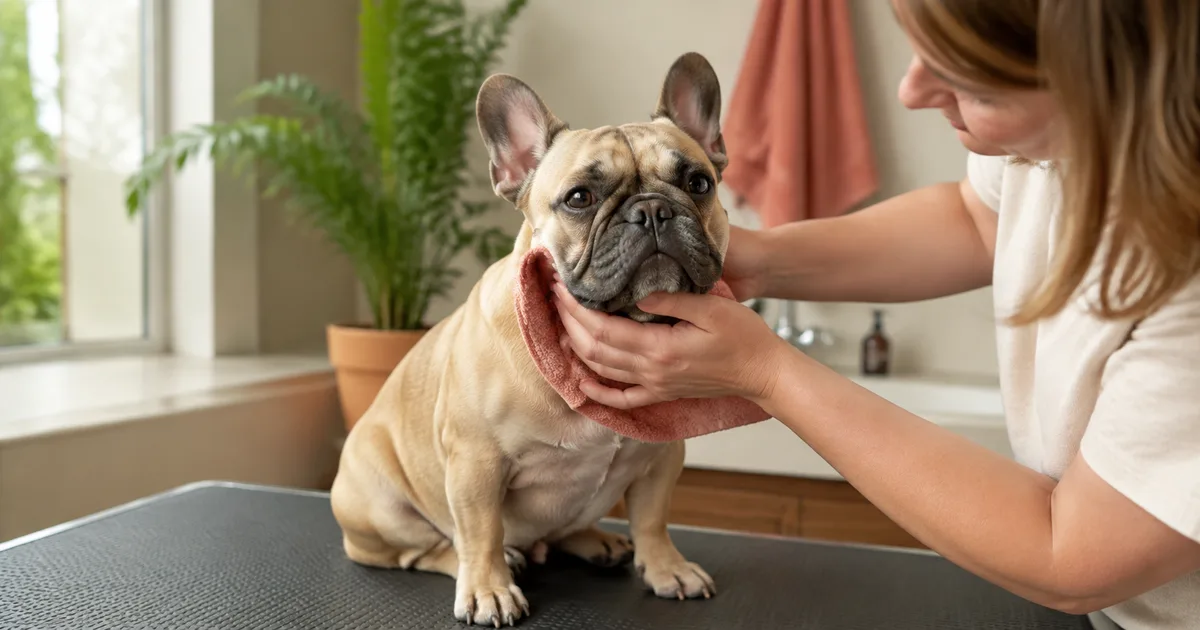
Saliva, food residue, water, and skin-to-skin contact can keep the chin or lip fold damp. Gently wiping after meals and patting the area dry may reduce irritation. Do not scrub, pick crusts, or rub the skin until it is raw.
Bowl condition and cleaning
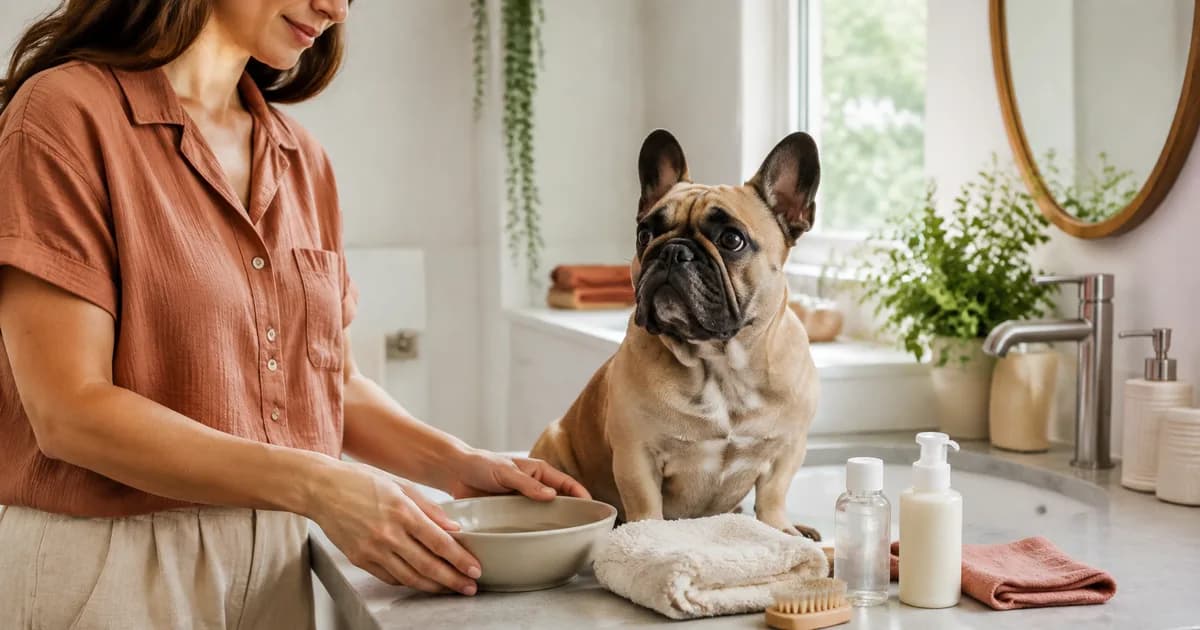
A cracked, worn, or difficult-to-clean bowl can hold residue. Replacing it with an intact, washable bowl is a reasonable hygiene step, but there is no single bowl material that proves or prevents every case. Wash food and water bowls regularly and rinse away cleaning residue.
Allergy, parasites, or another skin problem
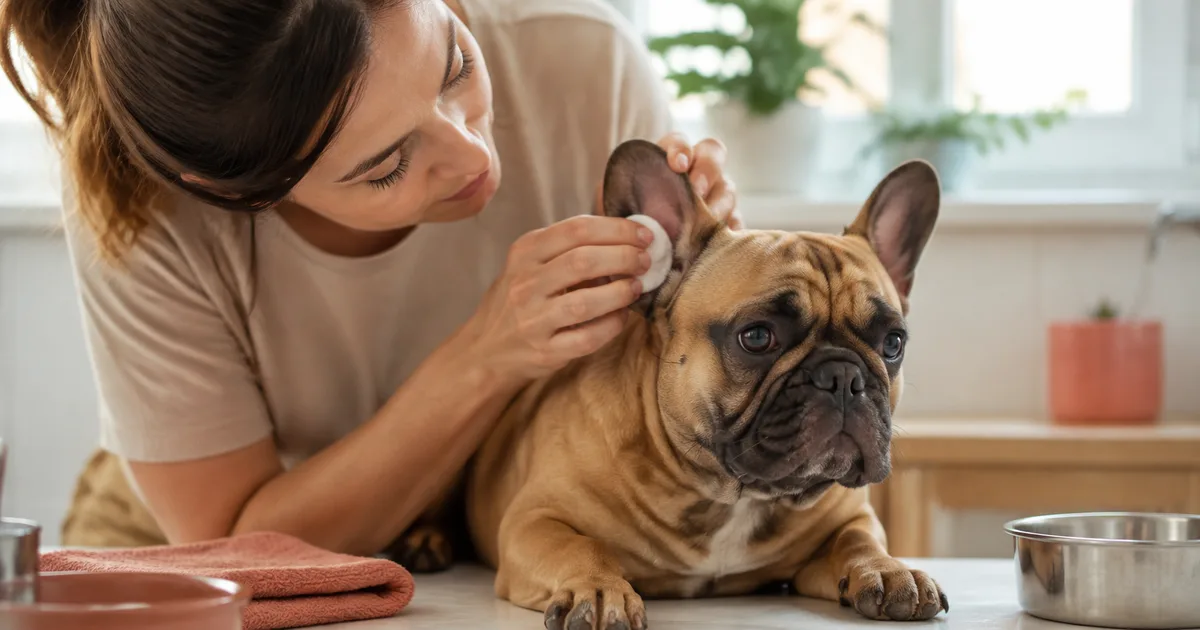
Recurrent chin lesions may occur alongside itching, ear disease, paw licking, skin-fold inflammation, or lesions elsewhere. Fleas, mites, allergies, contact irritation, and other skin disorders can be part of the picture. Repeatedly changing bowls or cleansers will not identify an underlying trigger.
Friction and contact irritation
Harness edges, toys, bedding, outdoor debris, or a product applied to the face can irritate the skin. If the problem follows contact with a particular item, stop using that item while you arrange advice and record the timing. Do not assume that timing proves the cause.
Safe supportive care before the appointment
If your Frenchie is comfortable and the problem is limited to the outer skin:
- Wash your hands before and after touching the area.
- Use clean water and soft gauze or a clean cloth to remove surface residue.
- Wipe gently without squeezing pustules or scraping crusts.
- Pat the skin dry, including any accessible lip fold.
- Wash bowls and keep bedding or toys that contact the area clean.
- Take a dated photograph so you can compare change and show the veterinarian.
Stop if the skin becomes more painful, the dog resists, or swelling increases. If a veterinarian has already recommended a cleanser, follow that clinic's instructions and the product label. Do not improvise a contact time, concentration, or treatment schedule.
What not to put on the chin
Avoid human acne creams, peroxide, essential oils, alcohol, fragranced products, harsh antiseptics, powders, and leftover prescriptions unless a veterinarian specifically tells you to use a particular product. Dogs can lick topical products, and some ingredients can irritate damaged skin or be unsafe when swallowed.
Do not pop or squeeze pustules. This can injure the skin, spread material into nearby tissue, increase pain, and make the lesion harder for a veterinarian to interpret.
Do not start antibiotics, antifungals, steroids, or a medicated cleanser based only on a photograph. The appropriate treatment depends on what is present and whether an underlying condition is driving the flare-up.
How a veterinarian may investigate it
The veterinarian may examine the chin, lips, ears, paws, skin folds, and other areas for a broader pattern. Depending on the signs, they may use:
- Cytology: a microscope check for inflammatory cells, bacteria, or yeast.
- Skin scraping or hair examination: to look for parasites or other causes of follicular lesions.
- Culture and susceptibility testing: especially for recurrent, deep, non-responsive, or resistance-risk infections.
- An allergy or underlying-disease history: including itch, flea prevention, diet, ear problems, seasonality, and recurrence.
Merck describes cytology, culture, and testing for other skin diseases as part of pyoderma diagnosis. The 2025 ISCAID canine pyoderma guideline also emphasizes confirming infection and investigating underlying causes before using antimicrobials. Read the ISCAID guideline.
What treatment may involve
Treatment is chosen for the individual dog and the depth of disease. Veterinary-directed topical therapy is often important for surface or superficial pyoderma. Deeper, recurrent, or non-responsive disease may need additional testing and a different plan. Treating an allergy, parasite problem, friction source, or skin-fold condition may be just as important as addressing secondary infection.
Do not stop a prescribed treatment early because the skin looks better, and do not reuse an old prescription for a new flare-up. A recheck may be needed to confirm that the infection and the underlying problem are improving. Systemic antimicrobials should be selected and monitored by a veterinarian; recurrent or deeper disease may require culture and susceptibility testing.
Preventing repeat flare-ups
Once the veterinarian has assessed the problem:
- follow the recommended cleansing or maintenance routine rather than cleaning more aggressively;
- keep the chin and lip folds dry without rubbing;
- wash bowls, bedding, and toys on a regular schedule;
- check for rubbing from harnesses, toys, or bedding;
- keep parasite prevention and allergy follow-up on the veterinary plan;
- record when lesions return, what areas are involved, and any itching or ear signs.
Recurrence is a reason to look for an underlying trigger, not a reason to keep adding products. If the chin improves and then repeatedly flares, share the timeline with your veterinarian.
Frequently asked questions
Is French Bulldog chin acne always a bacterial infection?
No. Chin bumps can reflect irritation, folliculitis, allergy, parasites, a skin-fold problem, or bacterial pyoderma. A veterinarian may need cytology or other tests to tell them apart.
Can I use benzoyl peroxide or human acne cream?
Do not use a human acne product unless your veterinarian has specifically approved a product and instructions for your dog. Concentration, contact time, licking, and damaged skin all matter, and some products can worsen irritation.
Should I change my Frenchie's bowl?
Replace a cracked, worn, or hard-to-clean bowl and wash it regularly. A clean, intact bowl may reduce residue and moisture, but changing bowl material does not diagnose or treat every cause of chin lesions.
When is a chin problem urgent?
Painful or rapidly spreading swelling, deep or draining lesions, marked weakness, facial swelling with breathing trouble, collapse, or a dog that seems seriously unwell needs prompt or emergency veterinary care.
Bottom line
French Bulldog chin bumps are a sign to investigate, not a diagnosis to treat from a photograph. Gentle cleaning and drying are reasonable supportive steps for a comfortable dog, but painful, recurrent, spreading, draining, or non-improving lesions should be examined. The safest treatment depends on confirming the cause and addressing any underlying skin problem.
Related articles: French Bulldog skin-fold dermatitis, French Bulldog ear odor and itching, French Bulldog skin health
Sources
- Pyoderma in Dogs and Cats — Merck Veterinary Manual
- Antimicrobial use guidelines for canine pyoderma — ISCAID, 2025
- Pyoderma in Dogs — VCA Animal Hospitals
This article is educational information, not a diagnosis or individualized treatment plan. Contact a veterinarian for persistent, painful, worsening, or recurrent skin changes.