Quick answer
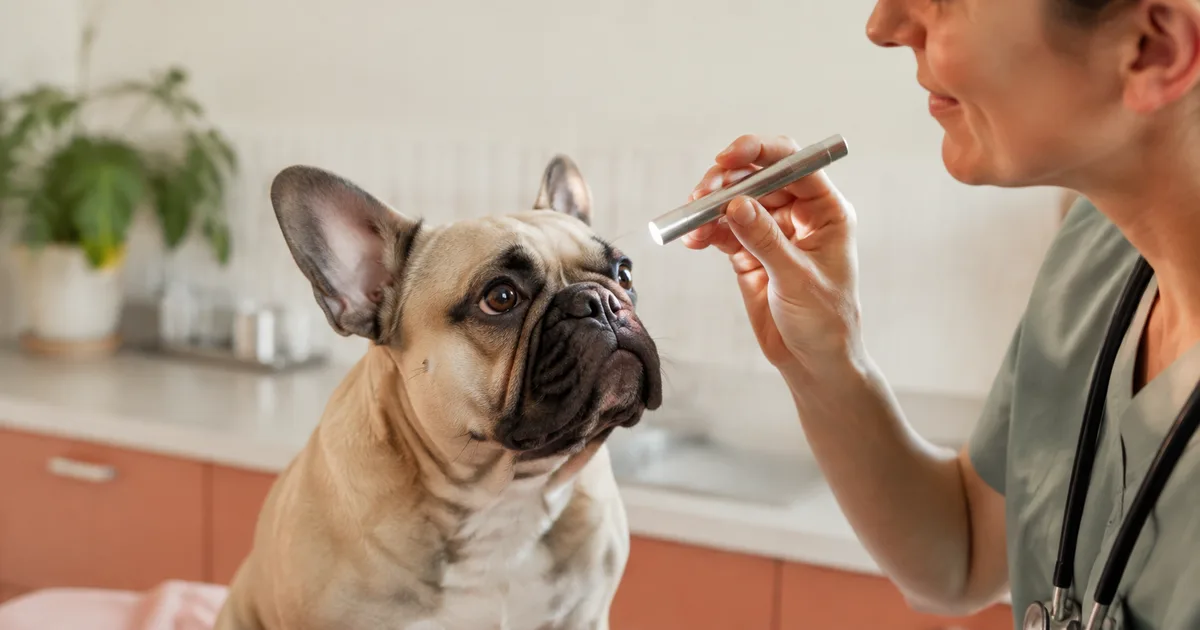
Cherry eye is the common name for prolapse of the tear-producing gland in a dog’s third eyelid. It often appears as a smooth red or pink swelling at the inner corner of the eye, but a photo or description cannot confirm the cause. Arrange a veterinary examination rather than trying to diagnose or push the swelling back yourself.
When the gland remains prolapsed, veterinarians usually discuss a procedure that repositions and preserves it. Complete removal is generally avoided when possible because the gland contributes to normal tear production and its removal increases the risk of keratoconjunctivitis sicca, also called dry eye. The best option depends on the examination, the cornea, tear production, and whether the problem has returned.
What cherry eye means
The third eyelid, or nictitating membrane, sits at the inner corner of the eye and contains a tear-producing gland. If the supporting tissue allows that gland to move out of position, it can become visible as a red or pink mass. Irritation, rubbing, discharge, or a change in tear production can develop, so the eye should not be treated as a cosmetic problem alone.
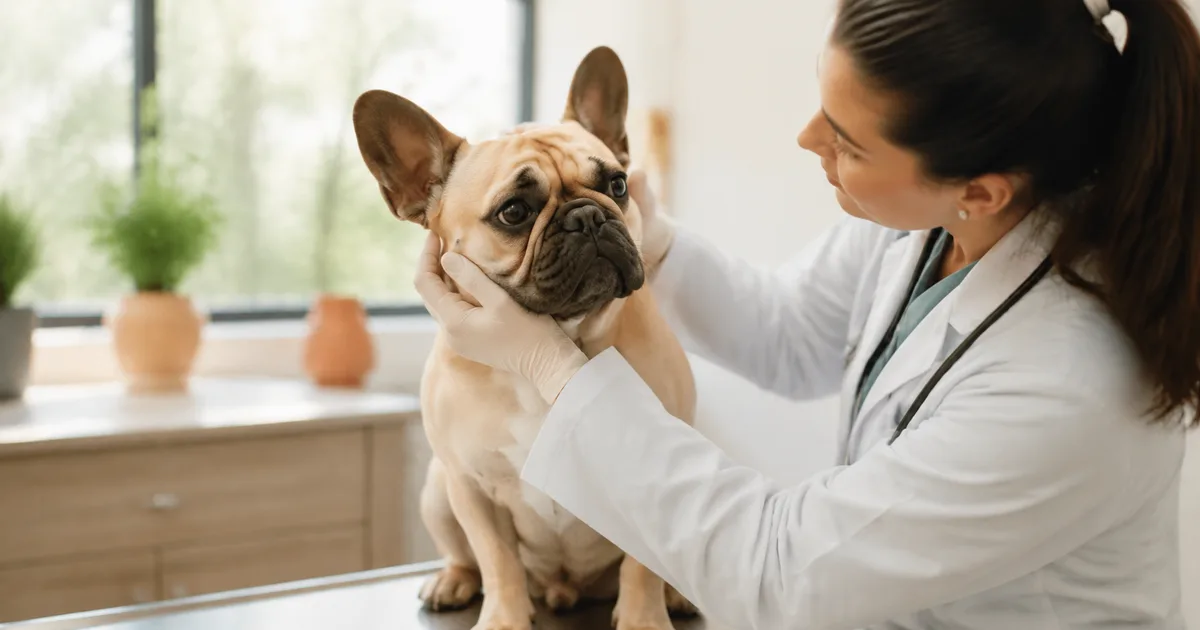
Other conditions can also cause a red swelling, discharge, or a change in the eye. A veterinarian may examine the eyelids and cornea, assess tear production, and check whether another problem is present before recommending treatment.
Surgery compared with massage
Gland-preserving surgery
For a persistent or recurrent prolapse, the usual surgical discussion is replacement of the gland using a suture, pocket, or envelope technique. These methods aim to return the gland to its normal position while keeping its tear-producing function. The exact technique is selected by the veterinarian for the individual eye.
Why removal is a different decision
Removing the gland may reduce the visible swelling, but it removes a source of tears. Veterinary references advise preserving the gland when possible because gland removal increases the later risk of dry eye. If removal is being considered, ask the veterinarian why replacement is not appropriate and how tear production will be monitored afterward.
What about massage?
Massage instructions found online are not a reliable substitute for an examination. Pressing an exposed eye or mass can cause irritation or worsen an unrecognized injury. Do not massage the area unless a veterinarian has examined your Frenchie and specifically shown you what to do.
What to do before the appointment
- Prevent rubbing or pawing at the eye; ask your veterinarian whether an Elizabethan collar is appropriate.
- Do not use human eye drops, leftover medication, or antibiotic or steroid products without veterinary direction.
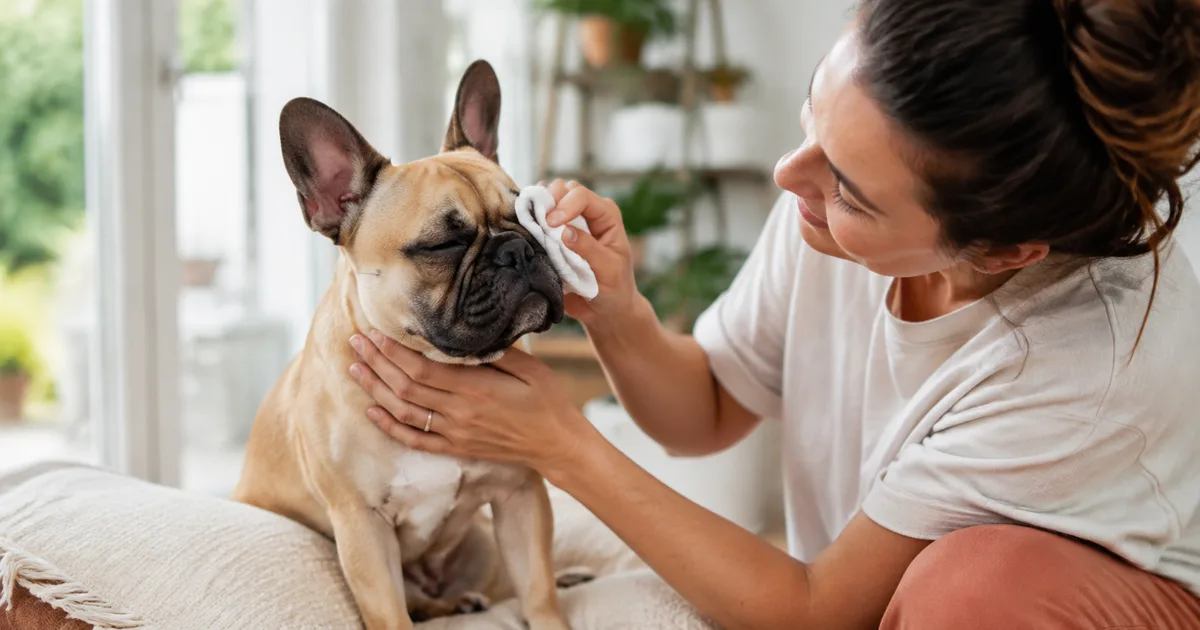
- Keep the area clean on the outside, but do not press the swelling or place products into the eye.
- Take a clear photo if the appearance changes, but do not delay care to monitor a picture.
Seek same-day veterinary advice for squinting, a closed eye, obvious pain, cloudiness, a wound, blood, a sudden change in vision, or a rapidly worsening swelling. A sudden bulging eye or severe trauma warrants urgent care.
Recovery and follow-up
After treatment, follow the surgeon’s instructions for medication, activity, rubbing prevention, and follow-up examinations. Contact the clinic if your Frenchie develops increasing pain, swelling, discharge, or persistent rubbing. Because tear production can change over time, ask whether follow-up tear testing is needed.
Bottom line
Cherry eye should be assessed by a veterinarian. When treatment is needed, preserving the gland is generally preferred when it can be safely repositioned. Home massage is not a proven replacement for diagnosis or treatment, and gland removal has important dry-eye implications.
Sources
- Merck Veterinary Manual: Nasolacrimal and lacrimal apparatus in animals
- Merck Veterinary Manual: Disorders of the nasal cavity and tear ducts in dogs
- VCA Animal Hospitals: Cherry eye in dogs
- American College of Veterinary Ophthalmologists: Cherry eye
This article is educational and does not diagnose or replace veterinary care.