Quick answer
Suspected heatstroke in a French Bulldog is an emergency: move the dog out of the heat, start cooling with water plus airflow, and contact an emergency veterinarian immediately. Do not wait for a perfect temperature reading or delay cooling until you reach the clinic.
Wet the body with water that is cooler than the dog, keep water away from the nose and mouth, and use a fan, air conditioning, or moving air to support evaporation. Then transport in an air-conditioned vehicle while following the clinic’s instructions. Do not wrap the dog in wet towels, force water to drink, or force a breathing-compromised or unconscious Frenchie into a bath.
Heavy panting that does not settle, noisy or difficult breathing, excessive drooling, weakness, confusion, vomiting, diarrhea, collapse, seizures, or abnormal gum color all require urgent action. A dog can appear better after cooling and still develop organ, clotting, kidney, liver, or neurologic complications, so veterinary assessment remains necessary.
Emergency steps: cool first, transport second
- Stop activity and move to safety. Get your Frenchie into shade, air conditioning, or a cool, well-ventilated area.
- Start active cooling immediately. Pour or spray water cooler than the dog over the body. Focus on wetting the coat and skin while keeping the face and airway clear.
- Add airflow. Use a fan, open moving air, or vehicle air conditioning to increase evaporative cooling.
- Call the nearest emergency clinic. Put the phone on speaker if possible. Describe the breathing, alertness, gum color, vomiting or diarrhea, exposure, and cooling already started.
- Transport promptly. Continue cooling during preparation and travel when practical and safe. Keep the car cool and ensure someone monitors the dog if another person can drive.
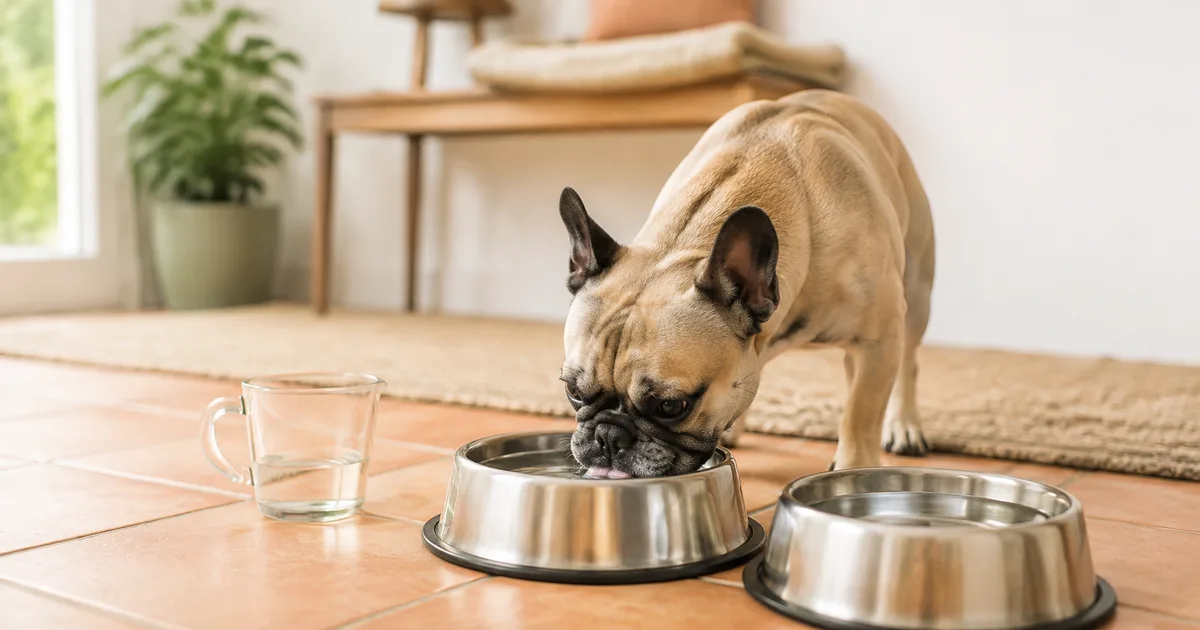
- Offer, never force, water. An alert dog that can swallow normally may be allowed small voluntary drinks. Do not pour water into the mouth.
- Attend the clinic even after improvement. Visible recovery does not rule out internal injury.
This sequence reflects the evidence-based message “cool first, transport second.” It does not mean spending a long time at home or postponing the veterinary call. Begin cooling at once, call concurrently, and leave as soon as transport is ready.
Signs of heat-related illness
Heat-related illness is progressive. A dog can move from distress to collapse quickly, and categories may overlap.
| Stage | Possible signs | Action |
|---|---|---|
| Early heat stress | Panting harder than expected, seeking shade, slowing down, widened tongue, reluctance to continue, increased drooling | Stop activity immediately, move somewhere cool, offer water, and monitor recovery closely |
| Concerning progression | Panting that does not settle, very noisy breathing, visible abdominal effort, weakness, wobbling, vomiting, diarrhea, or abnormal gum color | Begin cooling and contact an emergency veterinarian |
| Severe emergency | Confusion, collapse, inability to stand, seizure, loss of consciousness, severe breathing distress, or uncontrolled vomiting/diarrhea | Cool immediately and transport for emergency care |
Do not use panting alone to decide whether a Frenchie is safe. Panting is normal after activity, but the intensity, effort, recovery time, environment, and whole-dog behavior matter. Our guide to heavy breathing after exercise explains how to identify a change from your dog’s baseline.
Gum and tongue color
Gums may look unusually bright red early in a crisis and pale, gray, blue, or purple when circulation or oxygenation is compromised. Pigmentation and lighting can make color difficult to judge, so normal-looking gums do not cancel out collapse, confusion, weakness, or labored breathing.
Body temperature
A high rectal temperature can support the diagnosis, but heat-related illness is assessed from the exposure history and clinical condition as well as temperature. Cooling before arrival may lower the reading, and a severely ill dog can deteriorate even after temperature falls. Do not wrestle with a distressed Frenchie or delay first aid to obtain a temperature.
Why French Bulldogs are at higher risk
Dogs primarily lose excess heat by panting. French Bulldogs are brachycephalic, meaning their skull and muzzle are shortened. Narrow nostrils, an elongated or thickened soft palate, and other components of brachycephalic obstructive airway syndrome (BOAS) can increase resistance to airflow. A dog already working hard to move air has less reserve when heat, humidity, exertion, or excitement increases the demand for cooling.
Large-scale UK veterinary-record research supports this concern. A 2020 VetCompass study of more than 900,000 dogs identified French Bulldogs among breeds with increased odds of heat-related illness. Brachycephalic dogs overall had about twice the odds compared with dogs of moderate skull shape, and higher body weight relative to the breed-and-sex average was another risk factor. These results describe a UK veterinary population from 2016, not a prediction for an individual Frenchie, but they support conservative prevention.
Risk can rise further with:
- Noisy breathing or diagnosed BOAS.
- Excess body weight.
- Poor fitness or sudden unaccustomed exertion.
- Very young or advanced age.
- Heart, lung, neurologic, or other chronic disease.
- Previous heat-related illness.
- Dehydration, vomiting, or diarrhea.
- Thick clothing, restrictive equipment, or limited airflow.
- Some medications or medical conditions that affect circulation, breathing, or temperature regulation.
Snoring and noisy exercise breathing should not automatically be dismissed as normal for the breed. Use our French Bulldog breathing guide and discuss persistent noise, sleep disruption, heat intolerance, gagging, blue gums, or collapse with a veterinarian.
Cooling methods: what to use and avoid
Use water plus air movement
A 2023 peer-reviewed review of UK veterinary records describes cold-water immersion and evaporative cooling—water application with air movement—as recommended methods. For a French Bulldog at home, wetting the body while protecting the airway and adding airflow is often the most practical approach.
Do not delay because the only available tap or hose water feels cold. The Royal Veterinary College advises using whatever water is available provided it is cooler than the dog. The priority is to start removing heat.
Be cautious with immersion
Immersion can cool efficiently, especially in young, otherwise healthy dogs with exertional hyperthermia. It is not appropriate to force every patient into deep water. An unconscious, vomiting, neurologically abnormal, elderly, or breathing-compromised dog can aspirate water and is harder to monitor or resuscitate in a bath. Frenchies in respiratory distress need the head and airway continuously supported. When in doubt, use water over the body with airflow while following the emergency clinic’s directions.
Do not wrap in wet towels
Placing a damp cloth briefly on a less-haired area is different from wrapping the dog. Towels covering the body can warm, restrict air movement, and reduce evaporation unless they are continuously replaced. Direct water plus airflow provides more consistent heat transfer and leaves the dog visible for monitoring.
Avoid these mistakes
- Waiting for “tepid” water while the dog remains hot.
- Applying only an ice pack to one small area and assuming cooling is complete.
- Covering the whole dog in wet towels.
- Putting alcohol on the paws or skin.
- Forcing the head underwater or directing water into the nose or mouth.
- Forcing drinking in a confused, vomiting, collapsed, or unconscious dog.
- Giving human fever medicine; heatstroke is not a fever and these drugs can be toxic.
- Stopping the emergency journey because panting improved.
Why veterinary care is still required
Heatstroke is not only “being too warm.” Sustained harmful hyperthermia can injure the gastrointestinal tract, brain, kidneys, liver, muscles, blood vessels, and clotting system. Some complications are delayed.
At the clinic, the team may assess:
- Airway, breathing, oxygenation, circulation, and neurologic status.
- Core temperature and the response to cooling.
- Hydration, blood pressure, glucose, and electrolytes.
- Kidney and liver markers.
- Blood-cell counts and clotting function.
- Urine output and evidence of muscle or organ injury.
Treatment may involve oxygen, intravenous fluids, carefully monitored cooling, nausea control, airway support, blood products, seizure treatment, or hospitalization. The exact plan depends on severity; there is no safe home substitute for this monitoring.
Heatstroke is not only a hot-car problem
Cars are extremely dangerous, but exertion is also a major trigger. In UK data cited by a 2023 cooling study, exertional events accounted for 74.2% of canine heat-related illness cases presented for veterinary treatment. A Frenchie can overheat while walking, running, playing, struggling during travel, or becoming highly excited—even when the day does not feel extreme to a person.
Other scenarios include:
- A parked vehicle, conservatory, balcony, shed, garage, or poorly ventilated room.
- Direct sun with limited shade.
- Warm, humid conditions that reduce evaporative cooling.
- A long walk that becomes hotter on the return route.
- Play with another dog that continues past the Frenchie’s safe limit.
- Stress in a carrier or vehicle.
- A power or air-conditioning failure.
Never leave a dog in a parked vehicle, even with cracked windows, shade, or a planned “quick” stop. For travel preparation, see our French Bulldog road-trip guide.
A practical prevention plan
1. Plan around the individual dog, not one temperature
There is no universal safe outdoor temperature. Humidity, direct sun, shade, wind, surface heat, intensity, duration, acclimation, body condition, airway anatomy, and health all change risk. The first hot days of a season can be particularly challenging because the dog is not acclimated.
Check the hourly forecast and conditions at ground level. Use the Frenchie Heat Risk Checker as a planning aid, never as permission to continue when your dog is struggling. Our summer-safety guide covers walks, water, shade, paws, and swimming.
2. Choose cooler activity
- Walk during the coolest practical part of the day.
- Keep outings short enough that you can return before fatigue.
- Favor sniffing and calm exploration over running or intense fetch.
- Choose shade and take breaks before heavy panting begins.
- Carry drinking water and a separate supply for emergency cooling.
- Turn back at the first change in breathing, pace, coordination, or enthusiasm.
A comfortable harness may reduce pressure on the neck, but it cannot make hot exercise safe. It should not restrict shoulder movement or chest expansion.
3. Provide a reliable cool zone
Indoors, provide fresh water, ventilation, and access to a genuinely cool area. A fan helps evaporation but may be insufficient in a very hot, enclosed, or humid room. Have a plan for air-conditioning failure: another cooled room, a trusted contact, a pet-safe location, or early relocation before the home becomes hot.
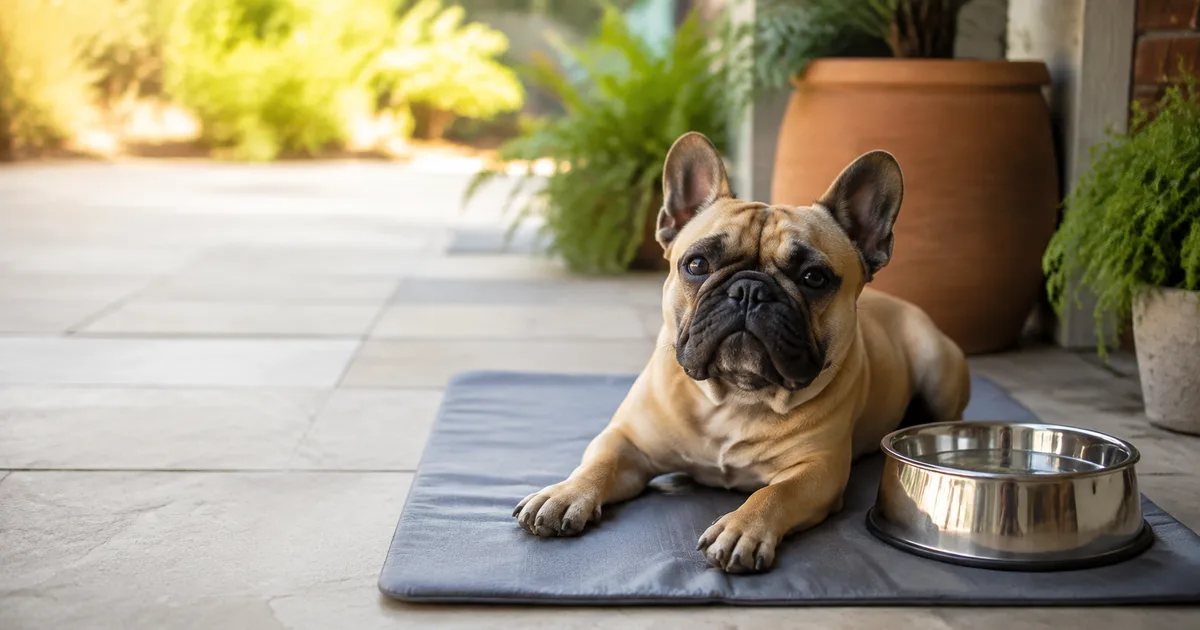
Cooling mats and vests may improve comfort for some dogs, but they are backups, not guarantees. Check the skin, fit, temperature, and whether the dog can move away. Never use cooling gear to extend an outing after the dog would otherwise need to stop.
4. Manage body condition and airway health
Ask your veterinarian to assess body condition rather than choosing a target from appearance alone. Extra weight increases heat production and breathing workload. Our French Bulldog weight guide explains how weight and body-condition scoring work together.
Discuss BOAS evaluation when a Frenchie has persistent noisy breathing, poor exercise tolerance, disrupted sleep, regurgitation, heat sensitivity, blue gums, or collapse. Earlier airway management may improve welfare, but only a veterinarian can assess the individual anatomy and treatment options.
5. Make water available without relying on it as protection
Provide fresh drinking water before, during, and after activity. Drinking does not prevent heatstroke when heat production exceeds the dog’s ability to cool. A sudden persistent change in drinking can also indicate illness; see our French Bulldog water-intake guide.
Prepare before hot weather arrives
Save the nearest daytime and after-hours veterinary numbers in your phone. Know the fastest route, keep a clean water container and towels for the car, and make sure the vehicle’s air conditioning works before taking your dog out. Tell sitters and walkers that Frenchies may need shorter activity and earlier stopping than other dogs.
Learn your dog’s normal:
- Resting breathing sound and effort.
- Panting level after a gentle walk.
- Time needed to recover in cool conditions.
- Normal gum and tongue appearance.
- Willingness to walk, play, drink, and settle.
A safe baseline makes change easier to recognize. Record concerning breathing only when doing so does not delay cooling or care.
Frequently asked questions
Is heavy panting always heatstroke?
No. Panting can follow normal activity, stress, pain, or excitement. It becomes concerning when it is disproportionate, does not improve promptly in a cool setting, or occurs with breathing effort, weakness, confusion, vomiting, diarrhea, abnormal gums, or collapse.
Should I use cold water on an overheated Frenchie?
Do not delay cooling while searching for lukewarm water. Current evidence supports water cooler than the dog plus airflow. Because a Frenchie may have airway compromise, avoid forced deep immersion and keep water away from the face. Call an emergency clinic while starting cooling.
Can a fan prevent heatstroke?
No. A fan can support evaporation from a wet coat, but moving hot or humid air may not cool a dog enough. Shade, water, activity reduction, a cooler environment, and monitoring are still necessary.
Can my Frenchie recover at home if the panting stops?
Not safely after suspected heatstroke or serious signs. Cooling can improve appearance before internal complications are detectable. Veterinary assessment is warranted after collapse, confusion, severe respiratory distress, neurologic signs, repeated vomiting or diarrhea, or other suspected heat-related illness.
Are cooling vests and mats enough for summer walks?
No product cancels heat, humidity, airway disease, or exertion. Use cooling equipment only as an added comfort measure and stop activity based on the dog’s breathing and behavior, not the product’s marketing.
Bottom line
French Bulldogs have limited respiratory reserve and are a documented higher-risk breed for heat-related illness. If your Frenchie develops uncontrolled panting, breathing difficulty, weakness, confusion, vomiting, diarrhea, collapse, or neurologic signs, move out of the heat, wet the body, add airflow, call an emergency veterinarian, and transport promptly. Do not wait for a thermometer or visible deterioration. Prevention depends on conservative activity, a reliable cool environment, healthy body condition, airway assessment, and stopping at the earliest sign your individual dog is struggling.
Sources
- Royal Veterinary College: Heatstroke in dogs and cats
- Royal Veterinary College: “Cool first, transport second”
- Hall et al., 2020: Incidence and risk factors for heat-related illness in UK dogs
- Hall et al., 2023: Cooling methods used for canine heat-related illness
- Merck Veterinary Manual: Protecting pets during hot summer months
- American Veterinary Medical Association: Warm-weather pet safety
- American Veterinary Medical Association: First-aid tips for pet owners
- American College of Veterinary Surgeons: Brachycephalic syndrome
This article provides general education, not diagnosis or individualized emergency instructions. If heatstroke is possible, begin safe cooling and contact an emergency veterinarian immediately.