Quick answer
Make a road trip safer by securing your Frenchie in a travel carrier or vehicle harness, practicing before the departure, planning flexible toilet and water breaks, keeping the car comfortably cool, and never leaving the dog alone in a parked car. A short-nosed dog may need extra care with heat, stress, and exertion.
There is no universal distance or stop schedule. Plan around your dog’s age, health, feeding routine, anxiety, and ability to settle, and shorten the trip if they show distress.
Before you leave
- Ask your veterinarian whether travel is appropriate and whether current health or medication needs a plan.
- Confirm identification, microchip details, vaccination records, and any destination requirements.
- Check the weather and plan a route with suitable places to stop.
- Book accommodation that confirms its pet policy, fees, room rules, and nearby toilet options.
- Pack food, water, medications, records, waste bags, a leash and harness, familiar bedding, cleaning supplies, and a first-aid kit for pets.
- Keep an emergency veterinary number and route options available.
For a dog with a breathing, mobility, motion-sickness, or anxiety concern, get individualized advice before the trip rather than relying on an online checklist.
Secure the car setup
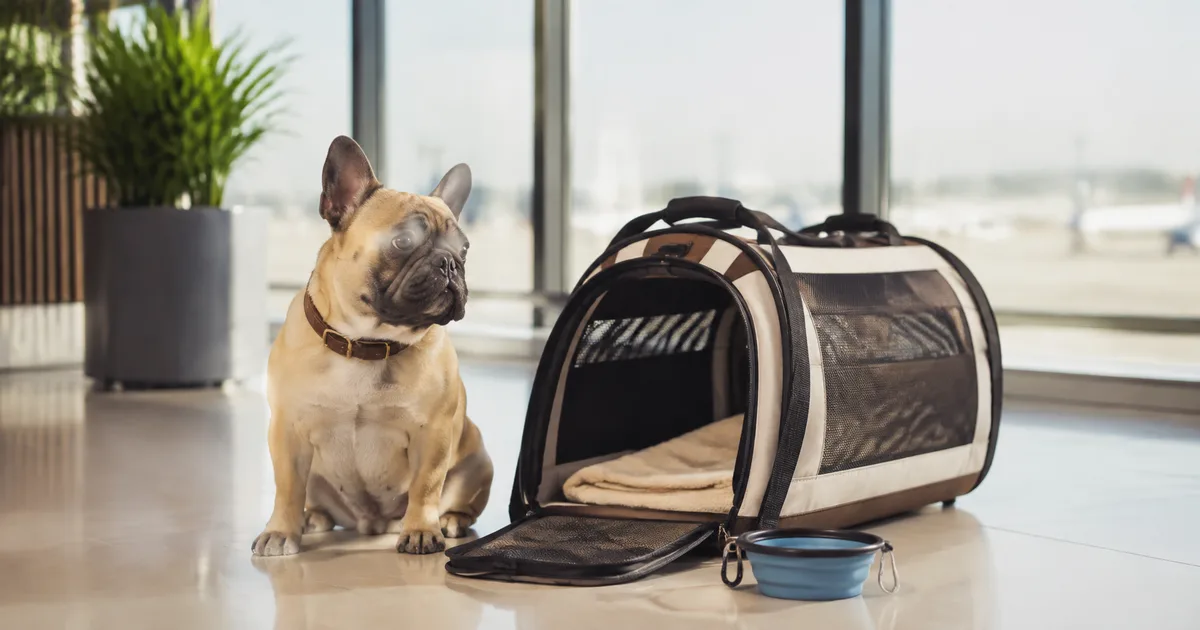
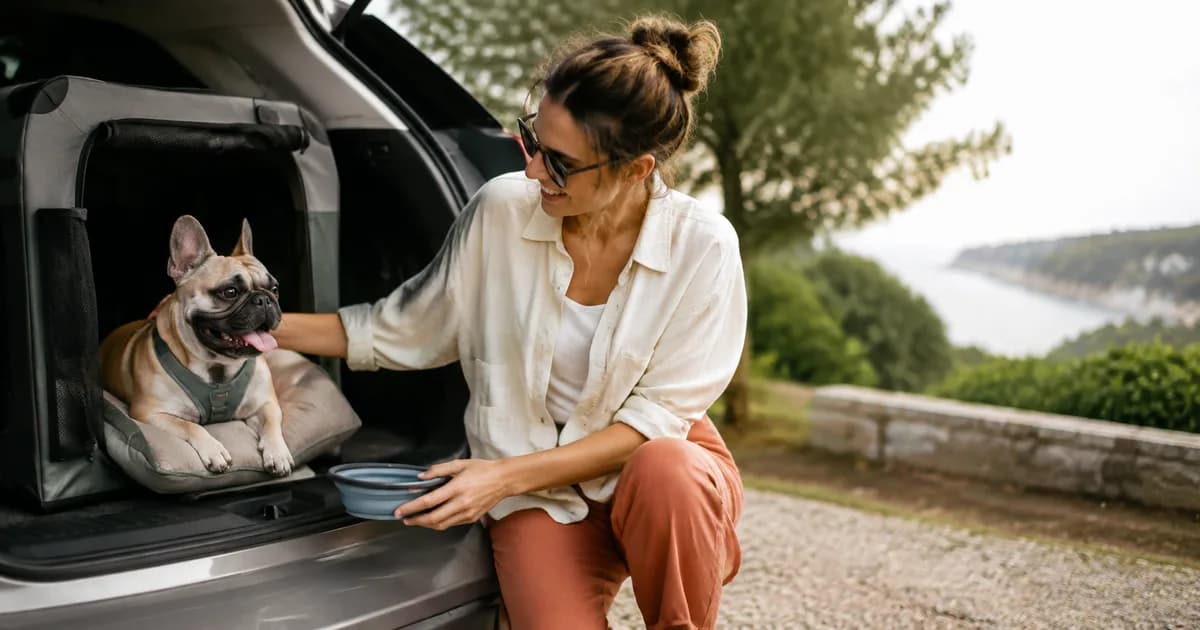
Do not let the dog travel loose in the cabin, ride in the front seat, or sit on a person’s lap. Use a carrier or harness designed for vehicle travel and follow its instructions for securing it. Check that the dog can breathe, change position, and remain stable without being compressed.
Keep the carrier out of direct sun and keep the cabin ventilated and comfortable. Do not cover it with thick fabric that could reduce airflow. Practice the setup while parked, then with short drives, and stop if the dog panics or becomes physically unwell.
Plan breaks around the dog
Offer opportunities to toilet, drink, stretch gently, and settle. The right timing varies; a dog who is panting, nauseated, restless, or urgently needs to toilet should not be made to wait for a preset interval.
Use a harness and leash before opening the car door. Choose a quiet area away from traffic, keep the dog under control, and never allow them to wander in an unfamiliar place. Bring water from home if a new source causes stomach upset.
Heat and parked-car risk
Never leave your Frenchie alone in a parked car, even for a quick errand or with windows cracked. If the air conditioning stops, end the journey and move the dog to a safe, cool place. Short-faced dogs can be vulnerable to heat and stress, so heavy panting, noisy breathing, weakness, vomiting, unsteady movement, or collapse requires immediate action and veterinary advice.
Avoid strenuous walks at hot destinations. Choose shaded routes, cool rest periods, and accommodation where the dog can settle away from direct sun.
Motion sickness and anxiety
Drooling, lip licking, vomiting, pacing, whining, freezing, or trying to escape may signal motion sickness, fear, or both. Record what happens and ask your veterinarian about travel preparation. Do not give sedatives, human medicines, CBD, or calming supplements without professional guidance.
Familiar bedding and reward-based carrier practice may help. Never force the dog into a carrier or continue a journey through panic without a safer plan.
At the hotel or rental
Inspect the room for cords, cleaning products, small objects, balconies, open windows, and escape routes. Keep the dog on a leash until the space is secure. Follow the property’s rules, keep noise reasonable, and do not leave the dog alone if they are not ready to settle there.
Bring the normal food and routine where possible. Sudden food changes, unfamiliar treats, and long periods without rest can make a trip harder.
When not to continue
Pause and seek advice if your dog has repeated vomiting, diarrhea, worsening breathing, collapse, severe weakness, signs of heat illness, or an injury. If anxiety cannot be managed without panic, arrange a veterinary or qualified behavior consultation and reconsider the route.
Bottom line
A good Frenchie road trip is secure, cool, flexible, and built around the individual dog. Practice the car setup, carry essentials, take breaks based on behavior and needs, and treat breathing or heat changes as safety issues rather than inconveniences.
Sources
- American Veterinary Medical Association: Traveling with your pet
- American Veterinary Medical Association: Air travel and short-nosed dogs
- Merck Veterinary Manual: What to do in a dog or cat emergency
This article is general educational information. It does not certify a carrier, set a universal break schedule, or replace veterinary travel advice.