
Quick answer
A harness can reduce pressure on a dog's neck during walks, but no design is automatically safe for every French Bulldog. Choose a body harness that fits securely, leaves the shoulders free, does not rub, and does not make breathing harder. Introduce it gradually and ask your veterinarian or a qualified reward-based trainer for help if your dog coughs, pulls hard, or becomes distressed.
VCA notes that a collar can put pressure on the trachea when a dog pulls, and that a properly fitted body harness is an alternative. VCA also cautions that some no-pull designs can press on the front of the shoulder. Read VCA's collar and harness guidance.
Features to look for
- a chest and body design that does not sit across the front of the shoulder joint
- adjustment points that allow a secure, comfortable fit around the neck and chest
- leash attachment points that give you control without pulling against the throat
- materials and edges that do not rub behind the front legs
- buckles that are easy to release and strong enough for the dog's size
- a design that your dog can wear without overheating or becoming fearful
There is no single “best” shape for every dog. VCA describes both H-style and Y-style harnesses as useful options when correctly fitted, while warning that some anti-pull designs may restrict or injure the shoulder. Choose based on your Frenchie's body shape, movement, walking behavior, and comfort rather than a marketing label.
How to check the fit
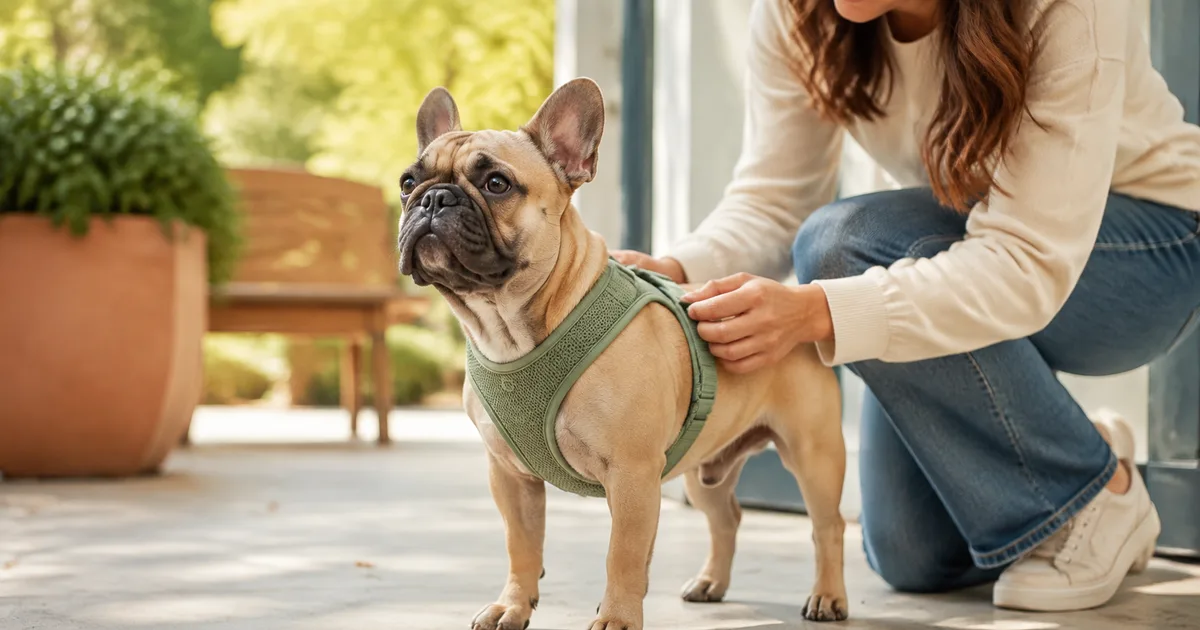
Follow the manufacturer's measuring instructions and check the harness again after your dog moves, sits, lies down, and walks. The harness should stay in position without compressing the throat or restricting the shoulders. You should be able to check the skin underneath it without forcing the straps tight.
Watch for:
- coughing, gagging, noisy breathing, or increased panting
- chafing, redness, hair loss, or pressure marks
- a harness that rotates, slips over the head, or lets the dog back out
- shortened steps or a change in shoulder movement
- freezing, repeated pawing, or avoidance when the harness appears
Remove the harness and contact your veterinarian if breathing becomes difficult or your dog shows pain. Do not use a tight harness to try to control a medical breathing problem.
Front, back, or dual attachment?
Front-attachment harnesses can reduce a dog's ability to pull forward by turning the body, but they are not a substitute for training and they must not press on the shoulder. Back-attachment harnesses may be comfortable for dogs that walk calmly. A dual-attachment design can offer flexibility, but only if both points are positioned correctly and the dog moves freely.
Avoid equipment that works by choking, sharp pressure, sudden jerks, or punishment. Reward-based training and a calm walking environment are safer ways to build leash skills. If your Frenchie pulls until coughing or has noisy breathing, pause the walk and ask a veterinary professional for advice.
Product reviews and prices
Harness prices, sizes, materials, availability, and manufacturer designs change. FrenchieCheck does not claim that one brand is the best for a fixed percentage of dogs, and this guide is not based on laboratory testing or a veterinary product trial. Check the current manufacturer specifications and return policy, measure your dog, and inspect the harness regularly.
Replace it when stitching, straps, buckles, or adjustment points are damaged. A harness is walking equipment—not a treatment for tracheal disease or brachycephalic airway syndrome.
When to get veterinary help
Arrange an appointment for coughing after leash pressure, repeated gagging, exercise intolerance, noisy breathing while resting, or a new change in how your Frenchie walks. Seek emergency care for severe breathing effort, blue or pale gums, collapse, or open-mouth breathing at rest that does not settle.
This article is educational information, not a diagnosis or product prescription. FrenchieCheck cannot assess airway effort or determine whether a harness is suitable for a particular medical condition online.
Related guides: French Bulldog Breathing Normality Guide, French Bulldog Heat Stroke, Can French Bulldogs Swim?