
Quick answer
Travel plans for a French Bulldog need extra attention to heat, breathing, stress, restraint, and changing airline or border rules. Car travel can be planned with a secured carrier or vehicle harness. Air travel is more complicated: short-nosed dogs may face increased respiratory risk, and no airline policy makes every individual dog a safe candidate.
Ask your veterinarian about the dog’s health and travel risk, then verify the current requirements directly with the airline and destination authorities. Do not rely on an old airline table or assume that in-cabin travel is automatically safe.
Start with the individual dog
Before booking, consider breathing at rest and during gentle activity, heat tolerance, anxiety, age, weight, motion sickness, mobility, and recent illness. A dog with worsening noisy breathing, repeated coughing, exercise intolerance, or difficulty recovering should be assessed before travel.
Ask the veterinarian about carrier size, feeding and water timing, motion sickness, medication, and whether the trip should be postponed. Do not sedate or give human medicine, CBD, or supplements unless the veterinarian specifically advises it for that dog and journey.
Air-travel rules change
Airlines set their own rules for cabin carriers, dimensions, weight limits, documentation, breed restrictions, seasonal restrictions, and routes. Check the airline’s current policy before purchasing a ticket and again before departure. Ask the airline to confirm the policy for a French Bulldog rather than relying on a third-party summary.
For international travel, requirements depend on the destination and may include a veterinary health certificate, vaccinations, identification, testing, treatments, or endorsement. Transit countries can add requirements. Start with the official destination guidance and your veterinarian well in advance.
Why cargo deserves special caution
The American Veterinary Medical Association notes that short-nosed dogs can be more vulnerable to respiratory problems during air travel. Temperature, stress, handling, carrier ventilation, and the dog’s existing airway can all matter. Do not treat cargo travel as a routine option for a French Bulldog without veterinary advice and confirmation that the airline will accept the dog.
If the airline allows the dog in the cabin, the carrier still needs to fit the airline’s requirements while allowing safe breathing and a stable position. Cabin travel is not a guarantee of comfort or medical safety.
Carrier practice
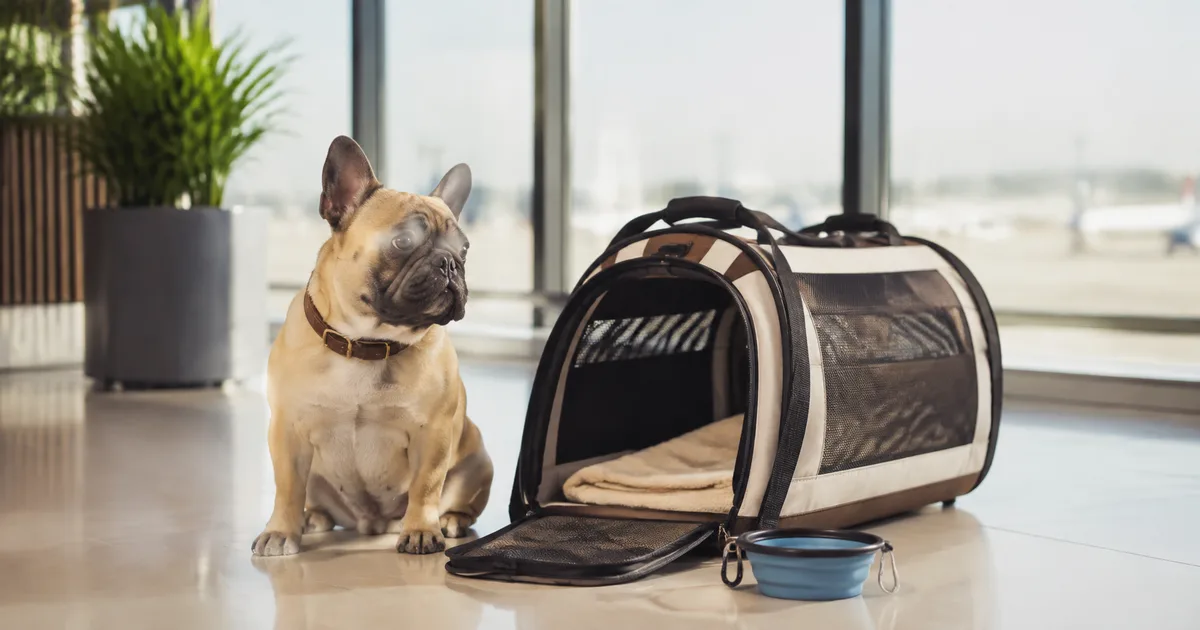
Choose a secure, well-ventilated carrier that meets the current airline’s requirements. Introduce it at home:
- Leave it open in a calm room.
- Reward investigation and voluntary entry.
- Feed or offer a familiar activity nearby or inside if the dog remains relaxed.
- Close the door briefly only when the dog is comfortable.
- Gradually practice carrying and short trips without rushing the next step.
Stop if the dog panics, struggles to breathe, overheats, or repeatedly tries to escape. Thick bedding, a tight fit, or a cover that blocks airflow can create additional risk.
Car travel
Secure the dog in a carrier or vehicle harness designed for travel; never let them ride loose, on a lap, or in the front seat. Keep the cabin comfortably cool, avoid direct sun, and plan flexible opportunities to toilet, drink, and settle. Never leave a Frenchie alone in a parked car.
Use a harness and leash before opening the car door. Practice the setup before a long trip and turn back if the dog becomes physically unwell or panicked.
Documents and packing
- Current identification and microchip contact details.
- Veterinary records and any required health certificate.
- Food, water, familiar bedding, leash, harness, and waste bags.
- Prescribed medication in its original packaging.
- Cleaning supplies and a pet first-aid kit.
- Contact details for veterinary care at the destination.
- Written confirmation of airline, accommodation, and destination requirements.
Requirements can change, especially for international travel. Use official sources for the route you are taking.
When to postpone or choose another plan
Reconsider the trip if your Frenchie has unresolved breathing problems, recent illness, heat intolerance, severe travel anxiety, or cannot remain safely restrained. A trusted caregiver or a veterinary discussion may be a better option than forcing a difficult journey.
During travel, seek urgent help for collapse, severe weakness, blue or gray gums, difficulty breathing, confusion, or signs of heat illness.
Bottom line
Safe travel starts with an individual veterinary assessment, current airline and destination rules, a practiced carrier or car setup, and a willingness to change the plan. For a French Bulldog, “the airline accepts dogs” is not the same as “this dog should fly.”
Sources
- American Veterinary Medical Association: Air travel and short-nosed dogs
- American Veterinary Medical Association: Traveling with your pet
- USDA APHIS: Frequently asked questions about traveling with your pet
- USDA APHIS: Pet travel process overview
This article is general educational information. Airline, border, and veterinary decisions must be confirmed for the individual trip.